Atlas Robot
Executive Summary
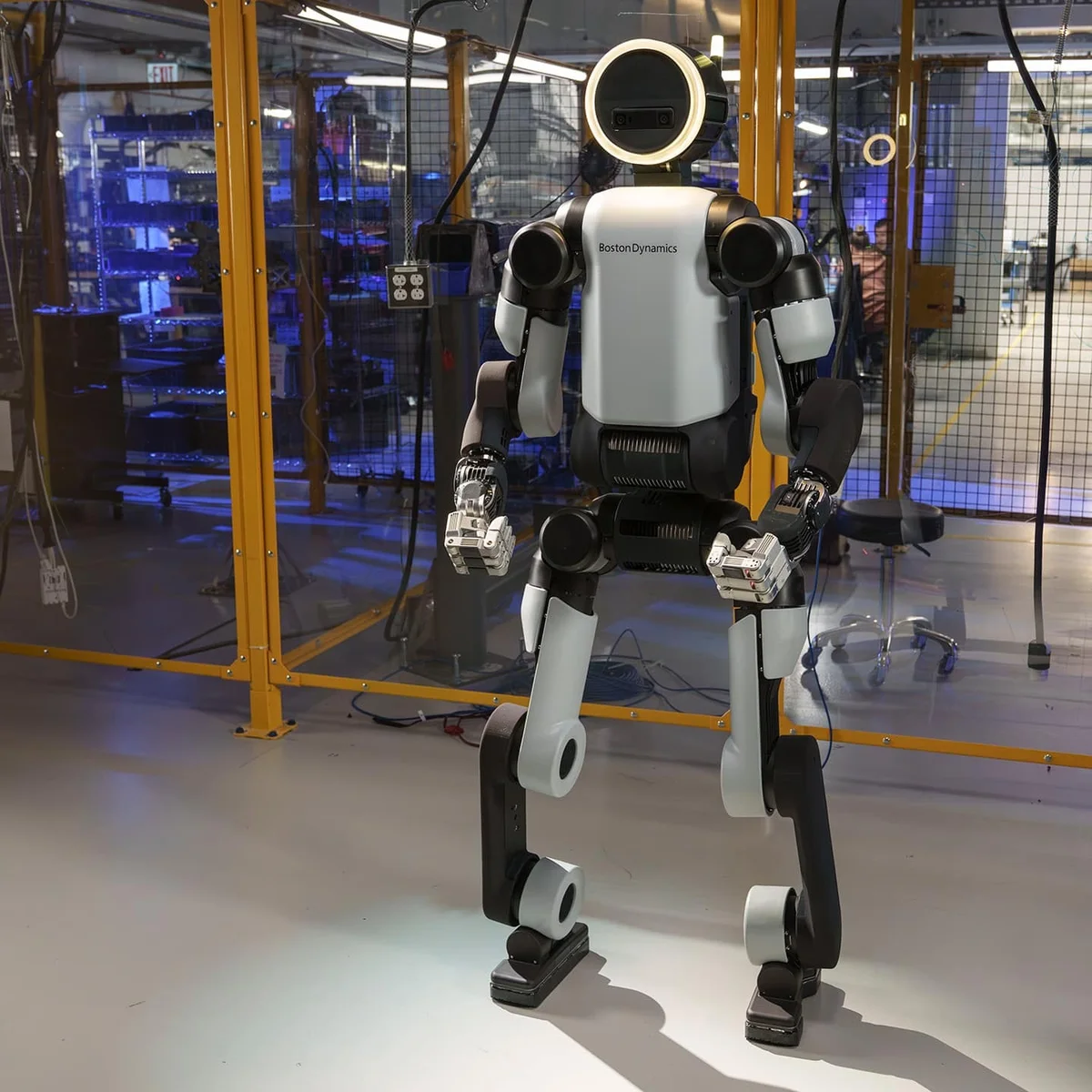
The Atlas robot is a humanoid robot developed by Boston Dynamics with funding and oversight from the U.S. Defense Advanced Research Projects Agency (DARPA). It is designed to operate both outdoors and inside buildings and has whole-body dynamic balancing. Atlas is able to sense obstacles and negotiate rough terrain autonomously or via teleoperation. The robot is 1.5 meters tall, weighs 89 kg, and has 28 degrees of freedom. The Atlas robot is a significant development in the field of robotics, with potential applications in search and rescue operations, disaster response, and other areas that require a blend of human-like mobility and robotic precision. The robot's advanced mobility and dexterity make it capable of complex, agile movements, and its design allows it to perform physically demanding tasks like running, jumping, and even executing backflips. The Atlas robot is a fully electric robot that utilizes an intricate hydraulic system, making it capable of complex movements. It is equipped with 28 joints and advanced control algorithms that enable it to execute tasks with high precision and adapt to its environment. The robot's design allows it to perform dynamic movements and actions, such as somersaults and balancing tasks, which require both strength and lightweight components to maintain high levels of performance and efficiency.Architecture & Design
The Atlas robot is designed with a focus on advanced mobility and dexterity. It is a fully electric robot that utilizes an intricate hydraulic system, making it capable of complex, agile movements. The robot is equipped with 28 joints and advanced control algorithms that enable it to execute tasks with high precision and adapt to its environment. The Atlas robot is notable for its construction materials and structural design, which emphasize a high strength-to-weight ratio. The robot incorporates titanium and aluminum, extensively using 3D printing technology to optimize its frame for robustness while maintaining a relatively low weight of 89 kg. The Atlas robot has two vision systems – a laser rangefinder and stereo cameras, both controlled by an off-board computer. It also has hands with fine motor skill capabilities. The robot integrates LiDAR, stereo and RGB-D cameras, IMUs, and joint encoders to create a detailed 3D perception of its surroundings. The Atlas robot is designed to operate in a variety of environments, including outdoors and inside buildings, and has whole-body dynamic balancing. The Atlas robot's design allows it to perform dynamic movements and actions, such as somersaults and balancing tasks, which require both strength and lightweight components to maintain high levels of performance and efficiency. The robot's advanced mobility and dexterity make it capable of complex, agile movements, and its design allows it to perform physically demanding tasks like running, jumping, and even executing backflips.Performance & Thermal
The Atlas robot's performance is not publicly disclosed in terms of specific benchmarks or thermal design power (TDP). However, the robot is capable of complex, agile movements, and its design allows it to perform physically demanding tasks like running, jumping, and even executing backflips. The robot's advanced control algorithms enable it to execute tasks with high precision and adapt to its environment. The Atlas robot's top speed is 2.5 m/s, and it has a height of 1.5 meters. The robot's power source is not publicly disclosed, but it is a fully electric robot that utilizes an intricate hydraulic system. The robot's thermal design is not publicly disclosed, but its design allows it to perform dynamic movements and actions, such as somersaults and balancing tasks, which require both strength and lightweight components to maintain high levels of performance and efficiency.Market Positioning
The Atlas robot is positioned as a leading-edge humanoid robot designed for advanced mobility and dexterity. The robot's potential applications extend beyond demonstrations of agility and power, and Boston Dynamics leverages Atlas to explore the practical uses of humanoid robots in real-world scenarios. The robot is primarily a platform for research and development, but its capabilities hint at future roles in scenarios like disaster response, where navigating hazardous or complex terrains is necessary, or in jobs that require high levels of mobility and manipulation skills. The Atlas robot is ranked as the number one humanoid robot out of 39, and its specifications and pricing are available for comparison with other humanoid robots. The robot's alternatives include the Ti5 Robotics Yao Guang humanoid robot, which is designed with advanced features for various applications. The Yao Guang is equipped with a high-torque leg joint capable of delivering up to 490 N·m, facilitating strong performance in tasks requiring significant lifting capabilities and maneuverability.Verdict
The Atlas robot is a significant development in the field of robotics, with potential applications in search and rescue operations, disaster response, and other areas that require a blend of human-like mobility and robotic precision. The robot's advanced mobility and dexterity make it capable of complex, agile movements, and its design allows it to perform physically demanding tasks like running, jumping, and even executing backflips. The Atlas robot's design and construction materials emphasize a high strength-to-weight ratio, making it capable of dynamic movements and actions. The robot's advanced control algorithms enable it to execute tasks with high precision and adapt to its environment. While the robot's performance and thermal design are not publicly disclosed, its capabilities and potential applications make it a significant development in the field of robotics. The Atlas robot is a leading-edge humanoid robot designed for advanced mobility and dexterity, and its potential applications extend beyond demonstrations of agility and power. The robot is primarily a platform for research and development, but its capabilities hint at future roles in scenarios like disaster response, where navigating hazardous or complex terrains is necessary, or in jobs that require high levels of mobility and manipulation skills. The Atlas robot is a significant step toward the integration of humanoid robots into everyday tasks and environments.Specifications
| Height | 1.5 m |
|---|---|
| Weight | 89 kg |
| Degrees of Freedom | 28 |
| Top Speed | 2.5 m/s |
| Power Source | Electric |
| Construction Materials | Titanium, Aluminum |
| Vision Systems | Laser Rangefinder, Stereo Cameras |
| Control Algorithms | Advanced |
| Applications | Search and Rescue, Disaster Response, Research and Development |
Frequently Asked Questions
What is the Atlas robot?
The Atlas robot is a humanoid robot developed by Boston Dynamics with funding and oversight from the U.S. Defense Advanced Research Projects Agency (DARPA).
What are the Atlas robot's potential applications?
The Atlas robot's potential applications extend beyond demonstrations of agility and power, and include search and rescue operations, disaster response, and other areas that require a blend of human-like mobility and robotic precision.
What is the Atlas robot's design and construction?
The Atlas robot is designed with a focus on advanced mobility and dexterity, and its construction materials emphasize a high strength-to-weight ratio. The robot incorporates titanium and aluminum, extensively using 3D printing technology to optimize its frame for robustness while maintaining a relatively low weight of 89 kg.