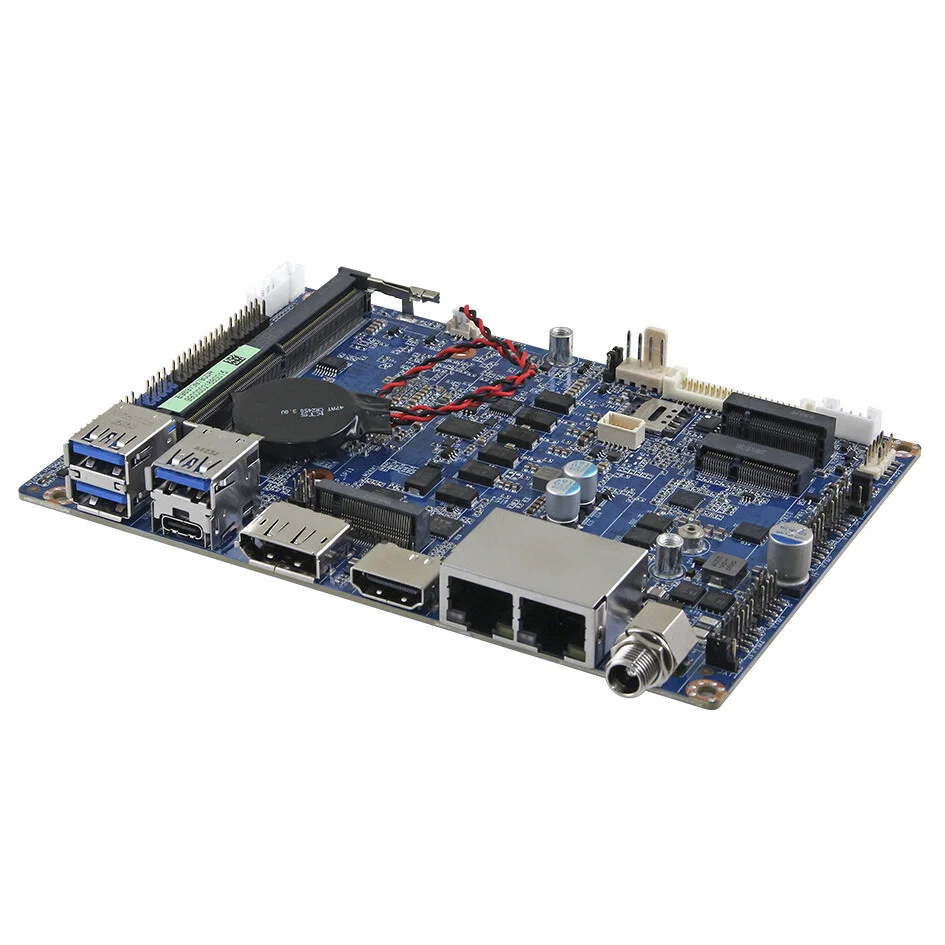
The Avalue ECM-PTL is a 3.5-inch micro module designed for edge computing and industrial automation, leveraging Intel Core Ultra Series 3 processors. This module is engineered to deliver powerful AI acceleration, enhanced energy efficiency, and advanced heterogeneous computing capabilities, making it suitable for applications requiring continuous AI processing such as machine vision, smart surveillance, and intelligent automation. The integration of these technologies enables the ECM-PTL to support a wide range of applications that require real-time data processing, analysis, and decision-making. By providing a robust and scalable platform, the ECM-PTL can help organizations to improve their operational efficiency, reduce costs, and enhance their competitiveness in the market.
Architecture & Design
The ECM-PTL integrates a CPU, GPU, and a dedicated NPU to enable efficient workload distribution. The built-in NPU is optimized for sustained AI workloads, allowing real-time AI inference while reducing CPU and GPU utilization. This architecture extends AI PC architecture to the edge, providing a robust foundation for edge computing and industrial automation. The module features high-speed DDR5 memory (up to 48 GB) and multiple expansion options, including M.2 Key M (PCIe Gen 5) for high-performance NVMe storage, M.2 Key B supporting 5G, WWAN, and GNSS modules, and M.2 Key E for Wi-Fi and wireless connectivity. This flexible design enables seamless integration of AI accelerators, high-speed storage, and wireless communication modules, ensuring scalability for future-ready edge systems. Furthermore, the ECM-PTL's modular design allows for easy maintenance, upgrade, and customization, reducing the total cost of ownership and minimizing downtime.
The ECM-PTL supports up to four independent displays, delivering flexible and versatile visualization capabilities through a combination of DisplayPort, HDMI, USB Type-C with DisplayPort support, and LVDS or eDP interfaces. This multi-display capability makes the platform particularly well-suited for applications such as digital signage, control rooms, and human-machine interface (HMI) systems, where simultaneous multiscreen output is essential. Equipped with dual 2.5GbE LAN and support for wireless modules, the ECM-PTL ensures reliable, low-latency, and high-bandwidth connectivity—enabling efficient real-time data transmission in edge AI environments. The module's connectivity options also enable seamless integration with other devices and systems, facilitating the creation of complex IoT ecosystems.
Built for demanding environments, the ECM-PTL supports wide-range DC input (12 V-24 V) and offers optional extended temperature operation. Combined with industrial-grade design features such as hardware monitoring, watchdog timer, and TPM 2.0 security, the platform ensures stable and secure operation across diverse deployment scenarios. The ECM-PTL's rugged design and robust security features make it an ideal choice for applications that require high reliability, security, and uptime, such as industrial control systems, transportation systems, and smart cities.
Technical Background
The ECM-PTL's architecture is based on the principles of heterogeneous computing, which involves the integration of different processing units, such as CPUs, GPUs, and NPUs, to achieve optimal performance and efficiency. The module's NPU is designed to accelerate AI workloads, reducing the load on the CPU and GPU and enabling real-time AI inference. The use of high-speed DDR5 memory and PCIe Gen 5 storage also enables fast data transfer and processing, making the ECM-PTL suitable for applications that require low latency and high throughput. The module's design is also influenced by the principles of edge computing, which involves processing data closer to the source to reduce latency, improve real-time decision-making, and enhance overall system efficiency.
Performance & Thermal
The performance of the ECM-PTL is driven by Intel Core Ultra Series 3 processors, which provide a significant boost in AI processing capabilities. However, specific performance metrics such as TDP, core count, and clock speeds are not publicly disclosed. Real-world benchmarks are also not available in the provided research material, making it challenging to assess the module's performance comprehensively. The thermal design of the ECM-PTL, including its cooling mechanisms and thermal limits, is not detailed in the research, which is crucial for understanding its operational capabilities in various environmental conditions. Despite these limitations, the ECM-PTL's performance is expected to be highly competitive in the edge computing market, given its advanced architecture and high-performance components.
Market Positioning
The Avalue ECM-PTL is positioned as a high-performance edge computing module for industrial automation and other applications that require real-time AI processing. Its advanced architecture, high-speed memory, and flexible expansion options make it an attractive choice for organizations that need to deploy AI-enabled systems at the edge. The module's rugged design, robust security features, and support for wide-range DC input and extended temperature operation also make it suitable for demanding environments and applications that require high reliability and uptime. As the demand for edge computing and AI continues to grow, the ECM-PTL is well-positioned to meet the needs of organizations that require high-performance, scalable, and secure edge computing solutions.