Exynos
Executive Summary
The Samsung Exynos series is a line of system-on-chips (SoCs) developed by Samsung Electronics' System LSI division and manufactured by Samsung Foundry. The Exynos series is a continuation of Samsung's earlier S3C, S5L, and S5P line of SoCs. The debut of Samsung's indigenously developed SoC is the Samsung Hummingbird (S5PC110/111), later renamed as Exynos 3 Single 3110. Samsung announced it on July 27, 2009.
In 2011, Samsung announced the Exynos 4 Dual 4210, which was later equipped on the Samsung Galaxy S II. Since then, Samsung has used Exynos as a representative brand name of their SoC, based on Arm Cortex cores. In 2017, Samsung launched their proprietary Arm ISA-based customized core designs, codenamed 'Exynos M'. The Exynos M series core made its debut with Exynos M1, nicknamed 'Mongoose', which was used for Exynos 8 Octa 8890.
Architecture & Design
The Exynos series has undergone significant changes in its architecture and design over the years. The early Exynos SoCs were based on the Arm Cortex-A8 and Cortex-A9 cores. Later, Samsung introduced the Exynos 5 Dual, which featured a dual-core ARM Cortex-A15 CPU. The Exynos 5 Dual had a memory interface providing 12.8 GB/s of memory bandwidth, support for USB 3.0 and SATA 3, and could decode full 1080p video at 60 fps.
In 2017, Samsung introduced the Exynos M series, which featured a proprietary Arm ISA-based customized core design. The Exynos M series core made its debut with Exynos M1, nicknamed 'Mongoose', which was used for Exynos 8 Octa 8890. The Exynos M series has been implemented throughout the flagship lineup of Samsung Exynos 9 series, until Exynos 990.
From 2021 onwards, Exynos M6 and M7 microarchitecture developments have been cancelled, and instead, Samsung adopts Arm Cortex-X core series as the primary core. In 2022, Samsung started the adoption of AMD RDNA GPU microarchitecture into their SoC, beginning with Exynos 2200 with Xclipse 920, which used customized 'mobile RDNA' based on RDNA 2. In 2024, Samsung expanded AMD RDNA 3-based GPU into their midrange chips, since Exynos 1480 (Xclipse 530).
Performance & Thermal
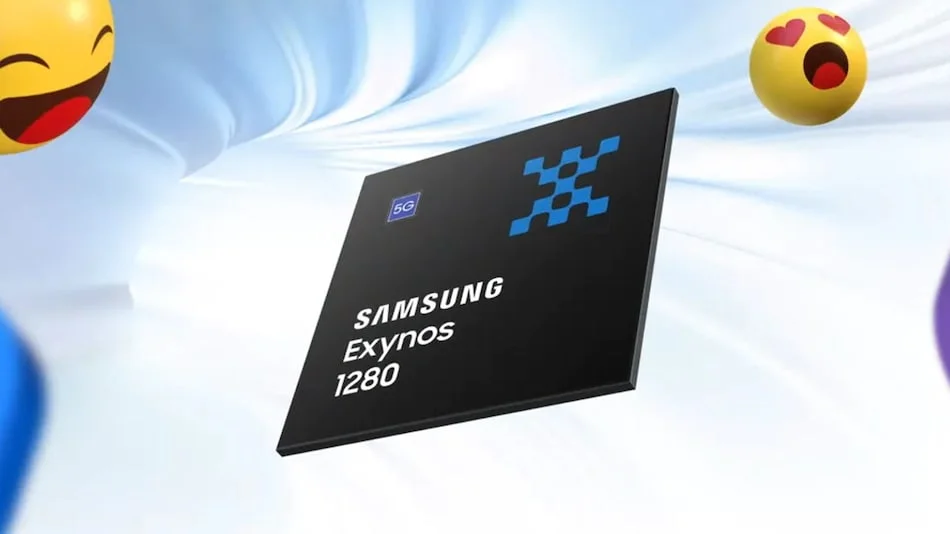
The Exynos series has consistently delivered high-performance and efficient thermal management. The Exynos 1280, for example, is a mid-range system on a chip (SoC) for smartphones and tablets. It was announced in early 2022 and is used in the Samsung Galaxy A53 5G. The Exynos 1280 features a 5nm EUV process, which provides high power efficiency and allows the chip to achieve a good balance between computing power and energy consumption.
The Exynos 1280 has a maximum resolution of up to 108MP, thanks to an advanced image signal processor (ISP). This essential block allows the processor to connect up to three input streams at once, enabling full triple camera support of up to 16MP with zero shutter lag. The Exynos 1280 also features an advanced neural network engine, which provides fast and secure on-device AI.
Market Positioning
The Exynos series has been positioned as a premium and high-performance line of SoCs. The Exynos series has been used in Samsung's flagship Galaxy phones, as well as in mid-range and budget devices. The Exynos series has also been used in other manufacturers' devices, such as Meizu and Vivo.
The Exynos series has faced competition from other SoC manufacturers, such as Qualcomm and MediaTek. However, the Exynos series has maintained its position as a premium and high-performance line of SoCs. The Exynos series has also been recognized for its power efficiency and thermal management, making it a popular choice among device manufacturers.
Verdict
In conclusion, the Samsung Exynos series is a line of high-performance and efficient SoCs. The Exynos series has consistently delivered high-performance and efficient thermal management, making it a popular choice among device manufacturers. The Exynos series has also been recognized for its power efficiency and advanced features, such as the Exynos M series and the adoption of AMD RDNA GPU microarchitecture.
The Exynos 1280, in particular, is a notable example of the Exynos series' capabilities. With its 5nm EUV process, advanced image signal processor, and neural network engine, the Exynos 1280 provides a good balance between computing power and energy consumption. The Exynos 1280 is also optimized for power efficiency, making it a great choice for devices that require high-performance and long battery life.
Overall, the Samsung Exynos series is a line of high-performance and efficient SoCs that has consistently delivered high-quality performance and features. With its advanced architecture and design, the Exynos series is well-positioned to continue to be a popular choice among device manufacturers and consumers alike.
Specifications
| Process Node | 5nm EUV |
|---|---|
| CPU | Octa-core |
| GPU | AMD RDNA 2 |
| Memory Interface | 12.8 GB/s |
| Maximum Resolution | 108MP |
| Neural Network Engine | Advanced |
| Thermal Management | Efficient |
| Power Efficiency | High |
Frequently Asked Questions
What is the Samsung Exynos series?
The Samsung Exynos series is a line of system-on-chips (SoCs) developed by Samsung Electronics' System LSI division and manufactured by Samsung Foundry.
What is the Exynos 1280?
The Exynos 1280 is a mid-range system on a chip (SoC) for smartphones and tablets. It was announced in early 2022 and is used in the Samsung Galaxy A53 5G.
What is the process node of the Exynos 1280?
The Exynos 1280 features a 5nm EUV process, which provides high power efficiency and allows the chip to achieve a good balance between computing power and energy consumption.
What is the maximum resolution of the Exynos 1280?
The Exynos 1280 has a maximum resolution of up to 108MP, thanks to an advanced image signal processor (ISP).
Is the Exynos 1280 optimized for power efficiency?
Yes, the Exynos 1280 is optimized for power efficiency, making it a great choice for devices that require high-performance and long battery life.