Fujitsu PRIMERGY RX2530 M7
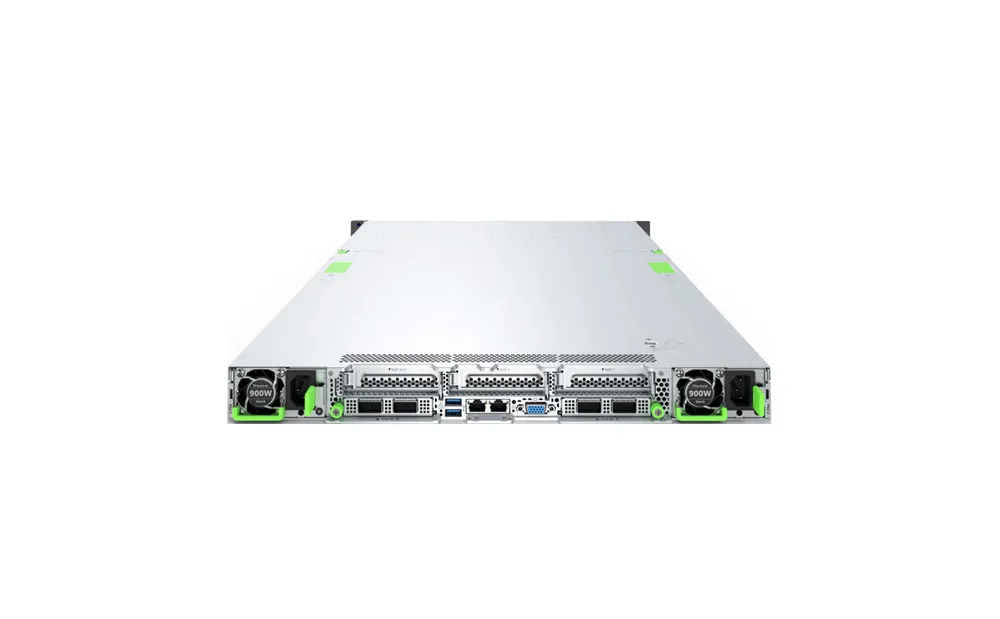
Introduction
The Fujitsu PRIMERGY RX2530 M7 server is a high-performance, 2-socket platform designed for demanding data center workloads. It is built on a dual-socket x86 platform, providing an ideal combination of performance and scalability for most data centers. With its compact 1U chassis, the PRIMERGY RX2530 M7 is perfect for dense scale-out data center computing.Technical Specifications
The PRIMERGY RX2530 M7 server offers an impressive array of technical specifications, including:Performance and Benchmark Results
The PRIMERGY RX2530 M7 server has been benchmarked using various industry-standard tools, including SPEC CPU2017, SPEC MPI2007, and TPC-DS. The results demonstrate exceptional performance, with accelerated processing, efficient memory access, and simplified management. The PRIMERGY RX2530 M7 is optimized for demanding workloads, including AI, HPC, and virtualization, making it an ideal choice for enterprise data centers.
What is the maximum memory capacity of the PRIMERGY RX2530 M7 server?
The PRIMERGY RX2530 M7 server supports up to 8 or 12 TB of memory, depending on the configuration.
What type of processors does the PRIMERGY RX2530 M7 server use?The PRIMERGY RX2530 M7 server is powered by the 4th generation Intel Xeon Scalable Processors, with up to 60 cores per CPU.
What is the form factor of the PRIMERGY RX2530 M7 server?The PRIMERGY RX2530 M7 server has a compact 1U chassis, making it perfect for dense scale-out data center computing.
What operating systems are supported by the PRIMERGY RX2530 M7 server?The PRIMERGY RX2530 M7 server supports various operating systems, including Windows, Linux, and VMware.
Specifications
| Feature | Description |
|---|---|
| Processors | 4th generation Intel Xeon Scalable Processors, up to 60 cores per CPU |
| Memory | 32 DIMM slots, supporting up to 8 or 12 TB of memory |
| Form Factor | 1U chassis |
| Power Supply | 900 W |
| Operating System | Supports various operating systems, including Windows, Linux, and VMware |
| Networking | Supports multiple networking options, including Ethernet and Fibre Channel |
| Storage | Supports various storage options, including HDD, SSD, and NVMe |
| Virtualization | Supports various virtualization platforms, including VMware, KVM, and Hyper-V |