GeForce
Executive Summary
Nvidia's GeForce brand has been a dominant force in the graphics processing unit (GPU) market for over two decades. With 19 iterations of the design, the GeForce series has evolved to cater to the diverse needs of the performance market. From discrete GPUs for add-on graphics boards to integrated GPUs on motherboards, the GeForce brand has expanded its reach to cover all tiers of the PC graphics market. In this article, we will delve into the architecture and design of the GeForce series, its performance and thermal characteristics, market positioning, and verdict.
Architecture & Design
The first GeForce products were discrete GPUs designed for add-on graphics boards, intended for the high-margin PC gaming market. The GeForce 256, launched in August 1999, was marketed as the 'world's first graphics processing unit.' It used the NV10 graphics processor, which operated at 120 MHz, and featured 32MB of SDR video memory, operating at 166 MHz. The card also had a bus width of 128 bits. Later, in December 1999, the GeForce 256 DDR was released, which had upgraded the video memory to 32 MB of DDR video memory, allowing it to obtain a higher memory clock speed of 150 MHz.
The GeForce 2 series, launched in March 2000, was another high-performance graphics chip. Nvidia moved to a twin texture processor per pipe architecture, which improved performance and efficiency. The GeForce 2 series also introduced an update to DirectX, which allowed it to have better visual effects and improved performance. The 'GeForce' name originated from a contest held by Nvidia in early 1999 called 'Name That Chip.' The company called out to the public to name the successor to the RIVA TNT2 line of graphics boards. There were over 12,000 entries received, and seven winners received a RIVA TNT2 Ultra graphics card as a reward.
GeForce technology has been introduced into Nvidia's line of embedded application processors, designed for electronic handhelds and mobile handsets. With respect to discrete GPUs, found in add-in graphics-boards, Nvidia's GeForce and AMD's Radeon GPUs are the only remaining competitors in the high-end market. GeForce GPUs are very dominant in the general-purpose graphics processor unit (GPGPU) market thanks to their proprietary Compute Unified Device Architecture (CUDA). GPGPU is expected to expand GPU functionality beyond the traditional rasterization of 3D graphics, to turn it into a high-performance computing device able to execute arbitrary programming code in the same way a CPU does, but with different strengths (highly parallel execution of straightforward calculations) and weaknesses (worse performance for complex branching code).
Performance & Thermal
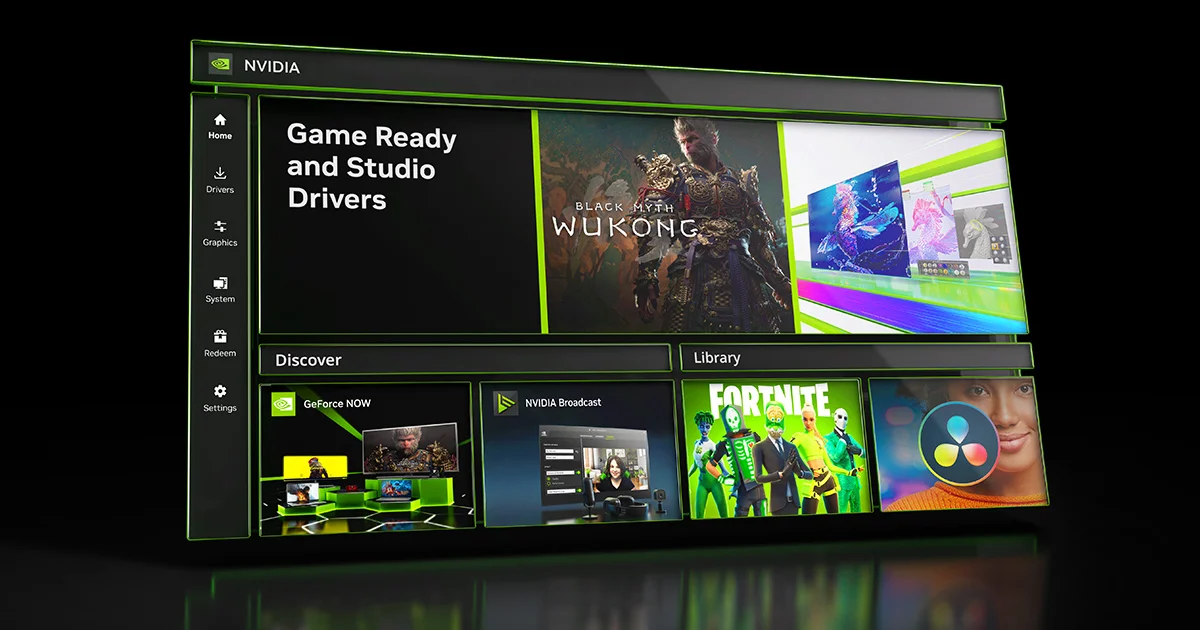
The performance of the GeForce series has been consistently impressive, with each new iteration bringing significant improvements in graphics processing power. The GeForce RTX 2050, for example, offers 2,048 shaders, even more than the RTX 2060, but with a reduced memory bus width of 64 bits. The Nvidia App, which is the essential companion for PC gamers and creators, allows users to optimize games and applications with a new unified GPU control center, capture favorite moments with powerful recording tools through the in-game overlay, and discover the latest Nvidia tools and software.
In terms of thermal performance, the GeForce series has made significant strides in reducing power consumption and heat generation. The use of advanced manufacturing processes, such as 12nm and 8nm, has enabled Nvidia to reduce the power consumption of its GPUs while maintaining or increasing performance. The GeForce RTX 2050, for example, has a TDP of 45W, making it suitable for use in thin and light laptops.
Market Positioning
Nvidia's GeForce brand is well-established in the market, with a strong reputation for delivering high-performance GPUs. The company has a significant market share in the discrete GPU market, with its GeForce and Quadro brands catering to the gaming and professional markets, respectively. The introduction of the Nvidia App has further strengthened the company's position in the market, providing users with a comprehensive suite of tools and software to optimize their gaming and creative experiences.
The GeForce series has also been successful in the mobile market, with the GeForce RTX 2050 being used in a range of laptops. The use of advanced technologies, such as ray tracing and artificial intelligence, has enabled Nvidia to differentiate its products from those of its competitors. The company's strong relationships with game developers and publishers have also helped to ensure that its GPUs are optimized for the latest games, further enhancing their performance and appeal to gamers.
Verdict
In conclusion, the GeForce series has been a highly successful brand for Nvidia, with a strong reputation for delivering high-performance GPUs. The company's commitment to innovation and its ability to adapt to changing market trends have enabled it to maintain its position as a leader in the discrete GPU market. The introduction of the Nvidia App has further strengthened the company's position, providing users with a comprehensive suite of tools and software to optimize their gaming and creative experiences.
As the market continues to evolve, with the increasing adoption of technologies such as ray tracing and artificial intelligence, Nvidia is well-positioned to maintain its leadership position. The company's strong relationships with game developers and publishers, combined with its advanced technologies and comprehensive suite of tools and software, make it an attractive choice for gamers and creators. With the GeForce series continuing to push the boundaries of graphics processing power, it is likely that Nvidia will remain a dominant force in the market for the foreseeable future.
The future of the GeForce series is exciting, with new technologies and innovations on the horizon. The use of advanced manufacturing processes, such as 5nm and 3nm, is expected to further reduce power consumption and increase performance. The adoption of new technologies, such as quantum computing and neuromorphic computing, is also expected to have a significant impact on the market, and Nvidia is well-positioned to take advantage of these trends.
In addition to its technological advancements, Nvidia has also been expanding its reach into new markets, such as the datacenter and automotive markets. The company's GPUs are being used in a range of applications, from artificial intelligence and deep learning to professional visualization and gaming. With its strong brand and reputation, combined with its advanced technologies and comprehensive suite of tools and software, Nvidia is well-positioned to continue its success in the future.
Overall, the GeForce series has been a highly successful brand for Nvidia, and its continued innovation and commitment to delivering high-performance GPUs have enabled it to maintain its position as a leader in the discrete GPU market. With its strong relationships with game developers and publishers, combined with its advanced technologies and comprehensive suite of tools and software, Nvidia is well-positioned to remain a dominant force in the market for the foreseeable future.
Conclusion
In conclusion, the GeForce series has been a highly successful brand for Nvidia, with a strong reputation for delivering high-performance GPUs. The company's commitment to innovation and its ability to adapt to changing market trends have enabled it to maintain its position as a leader in the discrete GPU market. With its advanced technologies, comprehensive suite of tools and software, and strong relationships with game developers and publishers, Nvidia is well-positioned to continue its success in the future.
Final Thoughts
The GeForce series has come a long way since its introduction in 1999, and it continues to be a major player in the graphics processing unit market. With its strong brand and reputation, combined with its advanced technologies and comprehensive suite of tools and software, Nvidia is well-positioned to remain a dominant force in the market for the foreseeable future. Whether you are a gamer, a creator, or simply someone who wants the best graphics processing power available, the GeForce series is definitely worth considering.
Recommendations
If you are in the market for a new graphics card, we highly recommend considering the GeForce series. With its advanced technologies, comprehensive suite of tools and software, and strong relationships with game developers and publishers, Nvidia is well-positioned to deliver high-performance GPUs that meet the needs of gamers and creators. Whether you are looking for a budget-friendly option or a high-end graphics card, the GeForce series has something to offer.
Future Outlook
The future of the GeForce series is exciting, with new technologies and innovations on the horizon. The use of advanced manufacturing processes, such as 5nm and 3nm, is expected to further reduce power consumption and increase performance. The adoption of new technologies, such as quantum computing and neuromorphic computing, is also expected to have a significant impact on the market, and Nvidia is well-positioned to take advantage of these trends.
Specifications
| GPU Architecture | Nvidia GeForce |
|---|---|
| CUDA Cores | 2048 |
| Memory | 4GB GDDR6 |
| Memory Bus | 64-bit |
| Boost Clock | 1.5 GHz |
| TDP | 45W |
| DirectX Support | 12 |
| OpenGL Support | 4.6 |
| Vulkan Support | 1.2 |
| DisplayPorts | 1 x DisplayPort 1.4a |
| HDMI Ports | 1 x HDMI 2.0b |
Frequently Asked Questions
What is the GeForce series?
The GeForce series is a brand of graphics processing units (GPUs) designed by Nvidia and marketed for the performance market.
What is the difference between the GeForce and Quadro series?
The GeForce series is designed for gaming and consumer applications, while the Quadro series is designed for professional applications such as CAD, video editing, and scientific computing.
What is the Nvidia App?
The Nvidia App is a comprehensive suite of tools and software that allows users to optimize their gaming and creative experiences. It includes features such as GPU control, recording tools, and game optimization.
What is the future of the GeForce series?
The future of the GeForce series is exciting, with new technologies and innovations on the horizon. The use of advanced manufacturing processes, such as 5nm and 3nm, is expected to further reduce power consumption and increase performance.