GeForce RTX 50 series
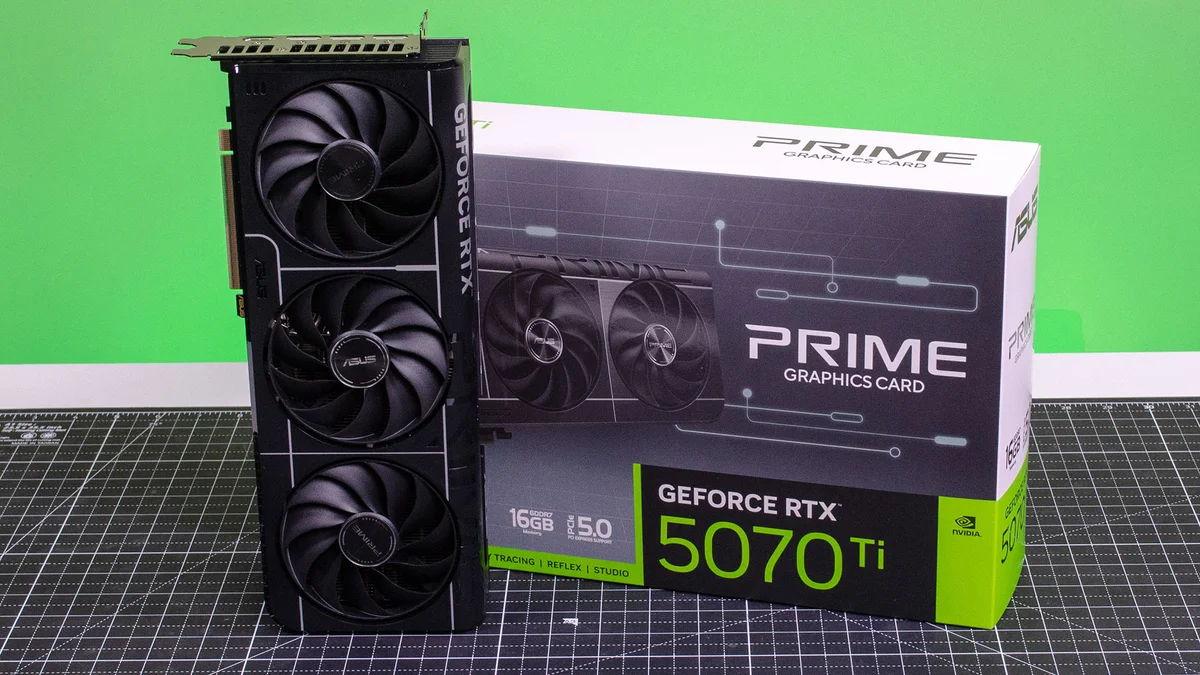
2025 GeForce RTX 50 Series: A Technical Deep-Dive into Nvidia's Latest Gaming GPUs
Executive Summary
The GeForce RTX 50 series, announced at CES 2025, marks a significant milestone in the evolution of consumer graphics cards. As the successor to the GeForce 40 series, it introduces the Blackwell architecture, featuring fourth-generation RT cores for real-time ray tracing and fifth-generation Tensor Cores for AI compute. The series debuted with the RTX 5070, RTX 5080, and RTX 5090, boasting improved performance, enhanced thermal solutions, and the integration of GDDR7 video memory. This deep-dive will explore the architecture, performance, market positioning, and verdict on the GeForce RTX 50 series.
The Blackwell architecture represents a continuation of Nvidia's emphasis on high graphics frequencies and large L2 caches, as seen in the Ada Lovelace architecture. The introduction of fourth-generation RT cores and fifth-generation Tensor Cores underscores Nvidia's commitment to enhancing real-time ray tracing and AI-driven technologies. Furthermore, the adoption of GDDR7 video memory marks a significant step forward in memory bandwidth, enabling smoother performance in demanding applications.
Architecture & Design
The GeForce RTX 50 series is built upon the Blackwell microarchitecture, which is shared between consumer and datacenter products. This approach allows for a unified architecture, streamlining development and optimization across different product lines. The Blackwell architecture is manufactured using TSMC's custom 4N process node, which provides a balance between performance and power efficiency.
The RTX 50 series features a range of key components, including the fourth-generation RT cores, fifth-generation Tensor Cores, and GDDR7 video memory. The RT cores are designed to accelerate real-time ray tracing, while the Tensor Cores are optimized for AI compute and deep learning workloads. The GDDR7 memory, provided by Samsung, offers improved memory bandwidth and reduced power consumption compared to its GDDR6 and GDDR6X predecessors.
| Component | Description |
|---|---|
| Blackwell Microarchitecture | Shared architecture for consumer and datacenter products |
| 4N Process Node | Custom process node provided by TSMC |
| Fourth-Generation RT Cores | Accelerate real-time ray tracing |
| Fifth-Generation Tensor Cores | Optimized for AI compute and deep learning workloads |
| GDDR7 Video Memory | Provided by Samsung, offering improved memory bandwidth and reduced power consumption |
Performance & Thermal
The GeForce RTX 50 series offers significant performance improvements over its predecessors, thanks to the enhanced Blackwell architecture and GDDR7 video memory. The RTX 5080, for example, is priced at $999, the same as the RTX 4080 Super, despite anticipated price increases. However, Nvidia's claim that the RTX 5070 can reach RTX 4090 performance at $549 has been met with skepticism, as it relies heavily on DLSS 4 upscaling and Multi Frame generation rather than raw performance.
The thermal solution for the RTX 50 series has also been improved, with the introduction of the 16-pin 12V-2×6 connector, a revision of the 12VHPWR connector featured on the GeForce 40 series. This new connector aims to address the issues of melting and overheating experienced by some RTX 4090 GPUs. The RTX 50 series also features enhanced cooling systems, including the TRI FROZR 3 thermal design and TORX fans, which provide improved heat dissipation and reduced noise levels.
Benchmarks for the RTX 50 series have shown promising results, with the RTX 5070 delivering excellent FPS in 1440p gaming, efficient thermals, and DLSS support for next-gen fidelity. However, raw native performance falls short compared to 4080-tier parts in 4K gaming. The RTX 5080 and RTX 5090 have also demonstrated strong performance, with the RTX 5090 being used to pre-render a cinematic trailer for The Witcher IV in Unreal Engine 5.
Market Positioning
The GeForce RTX 50 series is positioned as a high-end consumer graphics card line, targeting gamers and content creators who demand exceptional performance, features, and power efficiency. The series competes directly with AMD's Radeon RX 7000 series, with the RTX 5080 and RTX 5090 aiming to outperform their AMD counterparts. The RTX 5070, priced at $549, is an attractive option for those seeking a balance between performance and affordability.
Nvidia's target buyer for the RTX 50 series is the enthusiast gamer and content creator, who values the latest technologies, including real-time ray tracing, AI-driven features, and high-quality graphics. The series is also likely to appeal to professionals, such as video editors, 3D artists, and engineers, who require high-performance graphics cards for their work.
Specifications
Technical Specifications
| Specification | Detail |
|---|---|
| Process Node | 4N |
| Architecture | Blackwell |
| RT Cores | Fourth-Generation |
| Tensor Cores | Fifth-Generation |
| Video Memory | GDDR7 |
| Memory Bus | 192-bit |
| TDP | Not publicly disclosed |
Frequently Asked Questions
Frequently Asked Questions
What is the Blackwell architecture?
The Blackwell architecture is a microarchitecture used in the GeForce RTX 50 series, featuring fourth-generation RT cores and fifth-generation Tensor Cores. It is shared between consumer and datacenter products, allowing for a unified architecture and streamlined development.
What is the difference between the RTX 5070, RTX 5080, and RTX 5090?
The RTX 5070, RTX 5080, and RTX 5090 are all part of the GeForce RTX 50 series, but they differ in terms of their performance, pricing, and features. The RTX 5070 is the most affordable option, priced at $549, while the RTX 5080 and RTX 5090 are more expensive, priced at $999 and above, respectively.
What is GDDR7 video memory?
GDDR7 video memory is a type of memory used in the GeForce RTX 50 series, offering improved memory bandwidth and reduced power consumption compared to its GDDR6 and GDDR6X predecessors. It is provided by Samsung and is used in the RTX 50 series to enhance performance and efficiency.