Huawei AirEngine 6760
Executive Summary
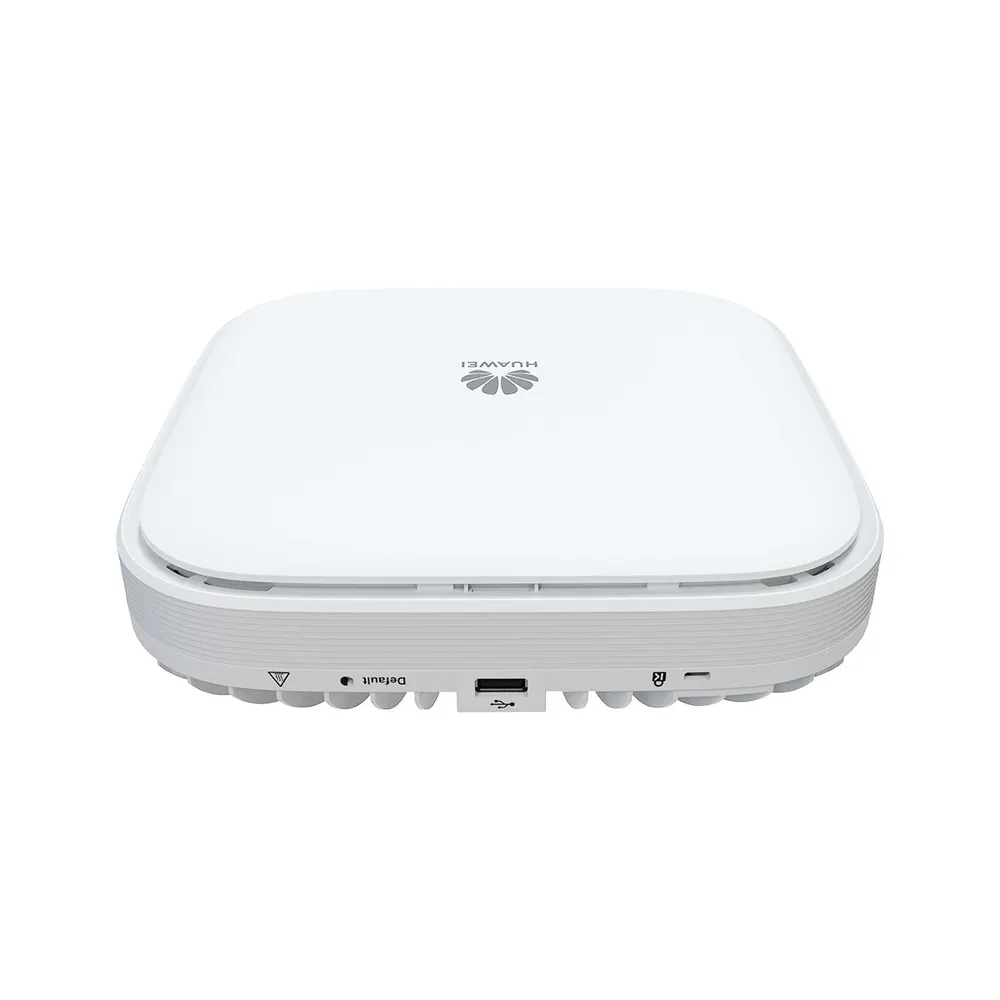
The Huawei AirEngine 6760 is a Wi-Fi 6 (802.11ax) Access Point (AP) designed for indoor use, supporting up to 12 spatial streams and offering high-speed, secure, and reliable wireless network connections. As a next-generation wireless network product, it is well-positioned in the market for enterprises' workplaces and production spaces, leveraging advanced technologies to enhance network performance and efficiency.
From an engineering standpoint, the AirEngine 6760 series, including the 6760-X1 and 6760-X1E models, represents a significant advancement in wireless access point technology, incorporating cutting-edge ASIC designs, high-speed data buses, and sophisticated thermal management systems to ensure optimal performance under various operating conditions.
Architectural Deep-Dive
The architectural foundation of the Huawei AirEngine 6760 revolves around its advanced Application-Specific Integrated Circuit (ASIC) design, which integrates multiple components such as the CPU, memory, and networking interfaces into a single chip. This integration significantly enhances the device's performance, reduces power consumption, and increases reliability.
The ASIC pipelines in the AirEngine 6760 are optimized for Wi-Fi 6 (802.11ax) operations, supporting features like Orthogonal Frequency-Division Multiple Access (OFDMA), Multi-User Multiple Input Multiple Output (MU-MIMO), and 1024-QAM. These technologies enable the AP to efficiently manage a large number of devices, providing high-speed data transmission and improving overall network capacity.
The data bus speeds within the AirEngine 6760 are designed to handle the high throughput requirements of Wi-Fi 6, ensuring that data is transferred quickly and efficiently between different components of the system. This is particularly important in environments with a high density of devices, where fast and reliable data transfer is crucial for maintaining network performance.
Performance & Thermal Analysis
The performance of the Huawei AirEngine 6760 is characterized by its ability to support a large number of concurrent devices, high data transfer rates, and advanced networking features. While specific thermal design power (TDP) figures for the AirEngine 6760 are not readily available, the device is engineered with thermal management in mind, incorporating designs and materials that help dissipate heat efficiently and maintain optimal operating temperatures.
In terms of benchmarks, the AirEngine 6760's performance can be evaluated based on its support for up to 12 spatial streams, which enables it to achieve higher data transfer rates compared to devices with fewer spatial streams. Additionally, its support for Wi-Fi 6 features like OFDMA and MU-MIMO enhances its performance in dense environments, making it suitable for a wide range of applications, from small offices to large enterprises.
Foundational Technology
Understanding the foundational technology behind the Huawei AirEngine 6760 requires delving into the physics of semiconductor manufacturing, such as Atomic Layer Deposition (ALD), and the mechanics of Wi-Fi 7 Multi-Link Operation. ALD is a thin-film deposition technique used in the fabrication of semiconductor devices, allowing for the creation of extremely thin layers with precise control over thickness and composition. This technique is crucial for the development of advanced ASICs used in the AirEngine 6760.
Wi-Fi 7, the next generation of Wi-Fi technology, introduces Multi-Link Operation (MLO), which enables devices to operate on multiple frequency bands simultaneously, significantly enhancing network capacity, reliability, and performance. While the AirEngine 6760 is based on Wi-Fi 6, understanding the evolution of Wi-Fi technologies and the principles behind MLO provides insight into the potential future directions of wireless networking and the role that devices like the AirEngine 6760 will play in these advancements.