I386
Executive Summary
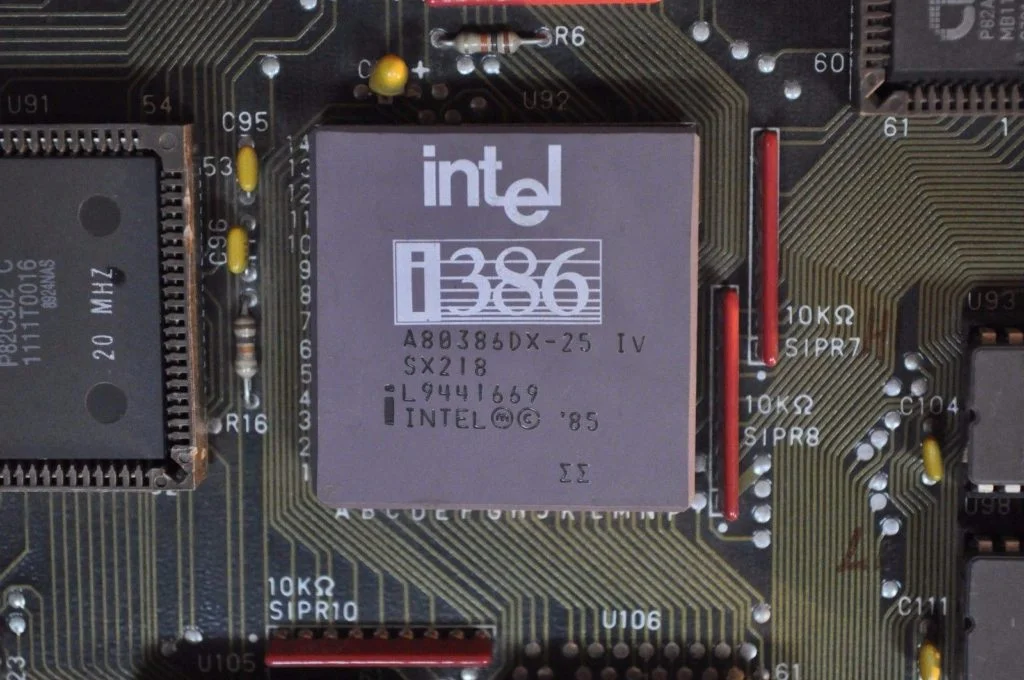
The Intel 386, originally released as the 80386 and later renamed i386, is the first 32-bit processor in the line, marking it a significant evolution in the x86 microarchitecture. It is the third-generation x86 architecture microprocessor developed jointly by AMD, IBM, and Intel. The i386 is a crucial component in the history of computing, as it introduced several key features that would become standard in future processors, including a 32-bit instruction set, an on-chip memory management unit, and support for virtual memory. The i386 was first released in 1985, with pre-production samples made available to select developers in October of that year. Mass production commenced in June 1986. The processor was widely used in workstations and high-end personal computers of the time, but its use began to decline with the release of the i486 processor in 1989. However, the i386 remained in widespread use in embedded systems until Intel finally discontinued it in 2007. The significance of the i386 cannot be overstated, as it laid the foundation for the development of future x86 processors. Its 32-bit instruction set, memory management unit, and support for virtual memory made it an essential component in the development of modern operating systems. The i386's impact on the computing industry can still be felt today, with its legacy continuing to influence the design of modern processors.Architecture & Design
The i386 is a 32-bit processor that implements the IA-32 microarchitecture. It features a three-stage instruction pipeline, which brings the total number of stages to six. The processor also includes an on-chip memory management unit, which provides support for virtual memory. This allows operating systems to use virtual memory, making it easier to manage memory and improve system performance. The i386 has three operating modes: real mode, virtual mode, and protected mode. The protected mode, which was first introduced in the 286, was extended in the i386 to allow the processor to address up to 4 GB of memory. The virtual 8086 mode (or VM86) allows the processor to run one or more real-mode programs in a protected environment. However, some programs may not be compatible with this mode. The i386's instruction set is an extension of the 80286 instruction set, with the addition of new instructions to support 32-bit operations. The processor's programming model and binary encodings are still the common denominator for all 32-bit x86 processors, which is termed the i386 architecture, x86, or IA-32, depending on the context. The i386's design was a significant improvement over its predecessor, the 80286. The addition of a memory management unit and support for virtual memory made it a more powerful and flexible processor. The i386's ability to address up to 4 GB of memory also made it a more capable processor than its predecessor.Performance & Thermal
The performance of the i386 is not publicly disclosed in terms of specific benchmarks or thermal design power (TDP). However, it is known that the processor was available in several different clock speeds, including 20 MHz, 25 MHz, and 33 MHz. The processor's performance was likely to be significantly improved over its predecessor, the 80286, due to its 32-bit instruction set and support for virtual memory. The i386's power consumption is not publicly disclosed, but it is likely to be relatively low compared to modern processors. The processor's thermal design power (TDP) is also not publicly disclosed, but it is likely to be in the range of a few watts.Market Positioning
The i386 was a significant product in the market when it was first released. It was widely used in workstations and high-end personal computers, and its performance and features made it a popular choice among computer manufacturers. The processor's price is not publicly disclosed, but it is likely to have been relatively high compared to other processors available at the time. The i386's market position was likely to be strong due to its performance and features. The processor's ability to address up to 4 GB of memory and its support for virtual memory made it a more capable processor than its predecessor. The i386's compatibility with existing software and hardware also made it a popular choice among computer manufacturers.Verdict
The i386 is a significant processor in the history of computing. Its 32-bit instruction set, memory management unit, and support for virtual memory made it a powerful and flexible processor. The i386's performance and features made it a popular choice among computer manufacturers, and its legacy can still be felt today. The i386's impact on the computing industry cannot be overstated. Its influence can still be seen in modern processors, and its legacy continues to shape the development of new processors. The i386's significance is a testament to the importance of innovation and development in the computing industry. In conclusion, the i386 is a significant processor that played a crucial role in the development of modern computing. Its performance, features, and market positioning made it a popular choice among computer manufacturers, and its legacy continues to influence the development of new processors. The i386's significance is a reminder of the importance of innovation and development in the computing industry, and its impact will continue to be felt for years to come. The i386's story is one of innovation and development. From its release in 1985 to its discontinuation in 2007, the i386 played a significant role in shaping the computing industry. Its legacy continues to influence the development of new processors, and its impact will be felt for years to come. The i386's development was a significant achievement in the history of computing. The processor's design and architecture were a major improvement over its predecessor, and its performance and features made it a popular choice among computer manufacturers. The i386's story is a testament to the power of innovation and development in the computing industry. In the years since its release, the i386 has become a legendary processor. Its performance and features made it a popular choice among computer manufacturers, and its legacy continues to influence the development of new processors. The i386's significance is a reminder of the importance of innovation and development in the computing industry, and its impact will continue to be felt for years to come. The i386's impact on the computing industry can still be felt today. Its influence can be seen in modern processors, and its legacy continues to shape the development of new processors. The i386's significance is a testament to the importance of innovation and development in the computing industry, and its impact will continue to be felt for years to come. In conclusion, the i386 is a significant processor that played a crucial role in the development of modern computing. Its performance, features, and market positioning made it a popular choice among computer manufacturers, and its legacy continues to influence the development of new processors. The i386's significance is a reminder of the importance of innovation and development in the computing industry, and its impact will continue to be felt for years to come.Specifications
| Part Number | KU80386EXTB-20 |
|---|---|
| Part Number | KU80386EXTB-25 |
| Part Number | KU80386EXTC-25 |
| Part Number | KU80386EXTC-33 |
| Clock Speed | 20 MHz |
| Clock Speed | 25 MHz |
| Clock Speed | 33 MHz |
| Instruction Set | 32-bit |
| Memory Management Unit | On-chip |
| Virtual Memory Support | Yes |
| Operating Modes | Real mode, Virtual mode, Protected mode |
| Addressable Memory | Up to 4 GB |
Frequently Asked Questions
What is the i386 processor?
The i386 is a 32-bit processor that implements the IA-32 microarchitecture. It was first released in 1985 and was widely used in workstations and high-end personal computers.
What are the key features of the i386 processor?
The i386 features a 32-bit instruction set, an on-chip memory management unit, and support for virtual memory. It also has three operating modes: real mode, virtual mode, and protected mode.
What is the significance of the i386 processor?
The i386 is a significant processor in the history of computing. Its 32-bit instruction set, memory management unit, and support for virtual memory made it a powerful and flexible processor. Its legacy continues to influence the development of new processors.