IBM Z
Introduction to IBM Z Architecture
The IBM Z family is built on the z/Architecture, which provides a high degree of scalability, reliability, and performance. The systems are designed to support a wide range of workloads, from traditional batch processing to modern AI and machine learning applications. With the introduction of the IBM Telum processor, the IBM Z family has taken a significant step forward in terms of AI acceleration and optimization.
The IBM Z family is designed to provide unparalleled security, with features such as secure boot, trusted execution environments, and advanced encryption. The systems are also designed to provide high availability, with features such as hot failovers, redundant components, and advanced error correction.
Virtualization in IBM Z Systems
Virtualization is a critical component of the IBM Z family, providing the ability to deploy multiple Logical Partitions (LPARs) and virtual machines (VMs) on a single system. The Processor Resource and System Manager (PR/SM) provides first-layer virtualization, allowing for the deployment of LPARs, while the z/VM hypervisor provides second-layer virtualization, allowing for the creation of VMs within LPARs.
The IBM Z family provides a high degree of flexibility and scalability, with the ability to dynamically add and remove resources such as CPUs, memory, and I/O devices. This allows for the creation of complex, multi-tiered environments that can support a wide range of workloads and applications.
Performance Nodes and Benchmarks
The IBM Z family is designed to provide unparalleled performance, with a focus on high-speed processing, low latency, and high throughput. The systems are built with advanced processor technology, including the IBM Telum processor, which provides significant improvements in terms of AI acceleration and optimization.
The IBM Z family has been benchmarked against a wide range of workloads, including traditional batch processing, online transaction processing, and modern AI and machine learning applications. The results have shown significant improvements in terms of performance, scalability, and efficiency, making the IBM Z family an ideal choice for enterprise-level applications.
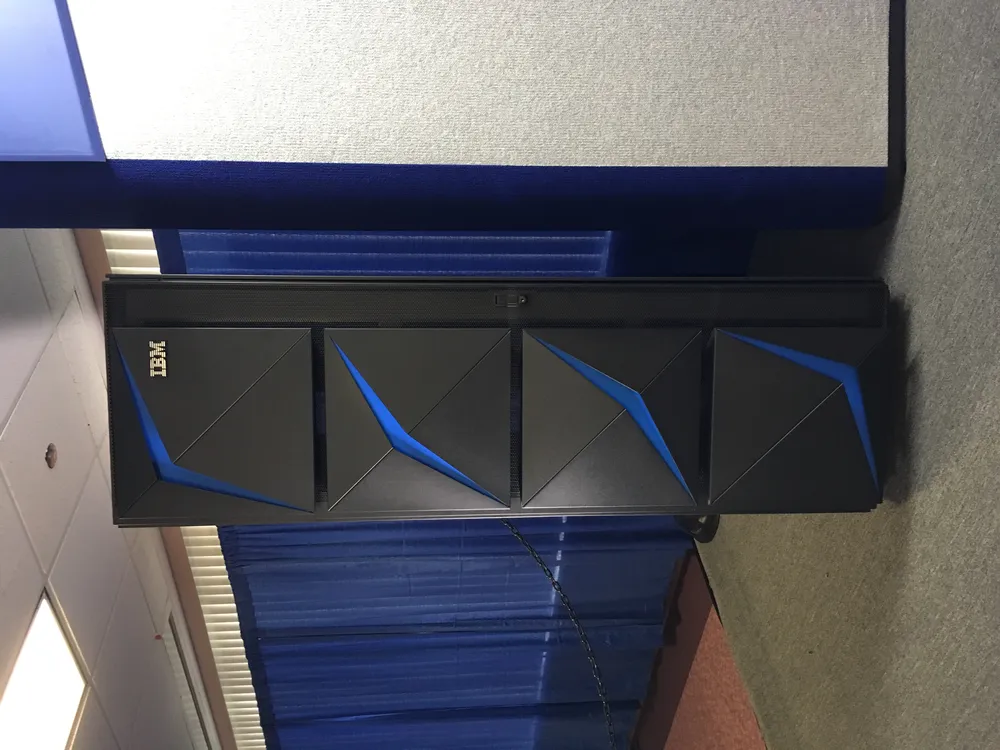
The IBM Z family is a series of mainframe computers designed for high availability, security, and performance. The systems are built with spare components capable of hot failovers, ensuring continuous operations.
What is the Processor Resource and System Manager (PR/SM)?The PR/SM is a component of the IBM Z family that provides first-layer virtualization, allowing for the deployment of Logical Partitions (LPARs) and virtual machines (VMs).
What is the IBM Telum processor?The IBM Telum processor is a high-performance processor designed for the IBM Z family, providing significant improvements in terms of AI acceleration and optimization.
What is the difference between the IBM z17 and z16 models?The IBM z17 and z16 models are both part of the IBM Z family, but they differ in terms of processor, cores, memory, and I/O devices. The IBM z17 has a higher number of cores, memory, and I/O devices, making it more suitable for large-scale enterprise applications.
Can I run traditional batch processing applications on the IBM Z family?Yes, the IBM Z family is designed to provide full backward compatibility, allowing applications written for previous systems to still run unmodified on the newest IBM Z system.
Specifications
| Model | Processor | Cores | Memory | I/O Devices | Security Features | Virtualization | Availability | Scalability |
|---|---|---|---|---|---|---|---|---|
| IBM z17 | IBM Telum processor | Up to 32 cores | Up to 40TB | Up to 256 I/O devices | Secure boot, trusted execution environments, advanced encryption | PR/SM, z/VM | Hot failovers, redundant components, advanced error correction | Up to 85 LPARs |
| IBM z16 | IBM Telum processor | Up to 24 cores | Up to 20TB | Up to 128 I/O devices | Secure boot, trusted execution environments, advanced encryption | PR/SM, z/VM | Hot failovers, redundant components, advanced error correction | Up to 60 LPARs |
| IBM z15 | IBM z15 processor | Up to 20 cores | Up to 10TB | Up to 64 I/O devices | Secure boot, trusted execution environments, advanced encryption | PR/SM, z/VM | Hot failovers, redundant components, advanced error correction | Up to 40 LPARs |
| IBM z14 | IBM z14 processor | Up to 16 cores | Up to 8TB | Up to 32 I/O devices | Secure boot, trusted execution environments, advanced encryption | PR/SM, z/VM | Hot failovers, redundant components, advanced error correction | Up to 20 LPARs |
| IBM z13 | IBM z13 processor | Up to 12 cores | Up to 4TB | Up to 16 I/O devices | Secure boot, trusted execution environments, advanced encryption | PR/SM, z/VM | Hot failovers, redundant components, advanced error correction | Up to 10 LPARs |
| IBM z12 | IBM z12 processor | Up to 10 cores | Up to 2TB | Up to 8 I/O devices | Secure boot, trusted execution environments, advanced encryption | PR/SM, z/VM | Hot failovers, redundant components, advanced error correction | Up to 5 LPARs |
| IBM z11 | IBM z11 processor | Up to 8 cores | Up to 1TB | Up to 4 I/O devices | Secure boot, trusted execution environments, advanced encryption | PR/SM, z/VM | Hot failovers, redundant components, advanced error correction | Up to 3 LPARs |
| IBM z10 | IBM z10 processor | Up to 6 cores | Up to 512GB | Up to 2 I/O devices | Secure boot, trusted execution environments, advanced encryption | PR/SM, z/VM | Hot failovers, redundant components, advanced error correction | Up to 2 LPARs |