Next Unit of Computing
Executive Summary
The Next Unit of Computing (NUC) is a line of small-form-factor barebone computer kits designed by Intel. The NUC line has been continuously developed over generations of Intel-based CPU launches, from Sandy Bridge-based Celeron CPUs in the first generation to Raptor Lake-based mobile and desktop CPUs in the thirteenth, and more recently Meteor Lake-based processors with AI capabilities. The standard barebone kits consist of the NUC board, in a plastic case with a fan, an external power supply, and a VESA mounting plate.
In July 2023, Intel announced that it would no longer develop NUC mainboards and matching mini PCs. However, they subsequently announced that NUC products will continue to be manufactured, sold, and supported by ASUS under a non-exclusive license. This move ensures that the NUC line will continue to be available to consumers, albeit with a different manufacturer.
Architecture & Design
The NUC motherboard measures approximately 10 × 10 centimeters (4 × 4 in), although some models have had different dimensions. The NUC line has undergone significant changes over the years, with each generation bringing new features and improvements. The first generation, launched in 2013, was based on Sandy Bridge-based Celeron CPUs, while the second generation was based on Ivy Bridge. The third generation, codenamed Bay Trail-M, introduced a new UCFF motherboard and system kit model, the DN2820FYB and DN2820FYKH, respectively.
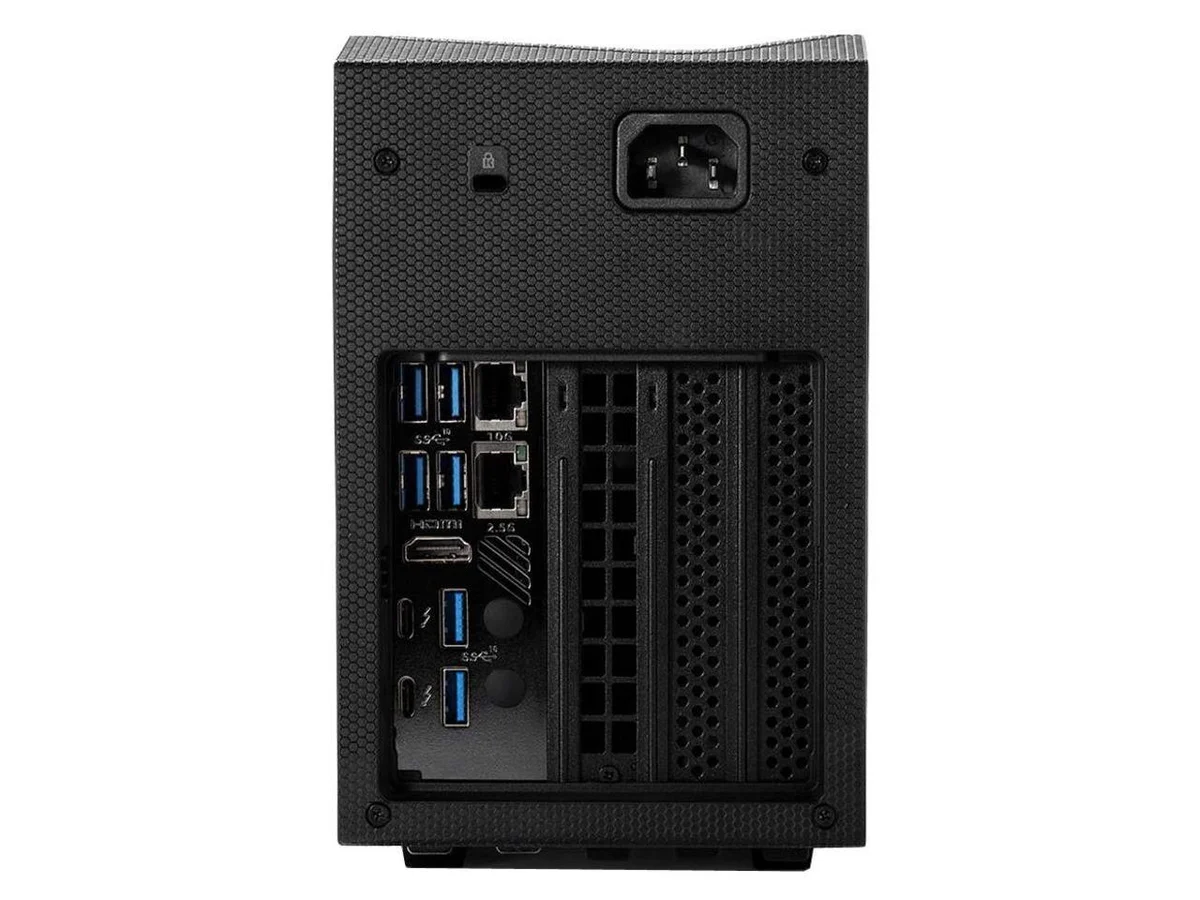
The NUC12 Extreme, a recent model, features a modular design with a compute element that can be customized with different graphics, memory, storage, and OS options. It also comes with Intel Wi-Fi 6E and 10Gbe LAN for improved wired and wireless gaming performance. The NUC12 Extreme is designed to provide gamers with the power they need to push the limits, with support for up to 12-inch dual-slot graphics cards and a PCIe x16 Gen 5 slot for next-gen discrete graphics.
Performance & Thermal
The NUC12 Extreme has been engineered for gamers, with an unlocked processor and hybrid architecture that allows for seamless gaming and multitasking. The processor has a 8C + 8c / 24T configuration with a 65W TDP, providing maximum performance with improved efficiency for all gaming needs. The NUC12 Extreme has also been shown to play games for hours without overheating, with CPU temperatures between 80 and 85 Celsius under load, and the GPU never surpassing 82C.
The NUC12 Extreme also targets high-performance gaming PCs with a 2560 x 1440 render resolution, while the Extreme version renders at 3840 x 2160 resolution. Both versions use DirectX 12 (feature level 11), providing a high-quality gaming experience. The NUC12 Extreme has been reviewed by various tech websites, with positive feedback on its performance, thermal management, and design.
Market Positioning
The NUC line has been positioned as a high-performance, small-form-factor computing solution for gamers and enthusiasts. The NUC12 Extreme, in particular, has been marketed as a gaming desktop that can provide maximum performance with improved efficiency. The NUC line has also been popular among DIY enthusiasts, who can customize their NUC kits with different components and configurations.
The NUC line has also been compared to other small-form-factor computing solutions, such as the Mac Mini and the ASUS ROG Z11. The NUC line has been praised for its performance, thermal management, and design, but has also been criticized for its limited upgradability and high cost. Overall, the NUC line has established itself as a premium brand in the small-form-factor computing market, with a loyal following among gamers and enthusiasts.
Verdict
In conclusion, the Next Unit of Computing (NUC) line has come a long way since its introduction in 2013. From its humble beginnings as a small-form-factor barebone computer kit to its current status as a high-performance gaming desktop, the NUC line has consistently delivered on its promise of providing maximum performance with improved efficiency. The NUC12 Extreme, in particular, has been a game-changer, with its modular design, customizable compute element, and support for next-gen discrete graphics.
While the NUC line has its limitations, such as limited upgradability and high cost, it has established itself as a premium brand in the small-form-factor computing market. The move by Intel to discontinue the development of NUC mainboards and matching mini PCs, and the subsequent announcement by ASUS to manufacture, sell, and support NUC products under a non-exclusive license, ensures that the NUC line will continue to be available to consumers. Overall, the NUC line is a testament to the power of innovation and design in the tech industry, and its impact will be felt for years to come.
Specifications
| CPU | Up to 12th Gen Intel Core i9-12900 |
|---|---|
| GPU | Up to NVIDIA GeForce RTX 3080 |
| Memory | Up to 64GB dual-channel DDR5 |
| Storage | Up to 3x PCIe Gen 4 SSDs |
| OS | Windows 11, Linux |
| Connectivity | Intel Wi-Fi 6E, 10Gbe LAN |
| Dimensions | 4 x 4 x 2 inches (10 x 10 x 5 cm) |
| Weight | 3.5 pounds (1.6 kg) |
Frequently Asked Questions
What is the Next Unit of Computing (NUC)?
The Next Unit of Computing (NUC) is a line of small-form-factor barebone computer kits designed by Intel.
What is the NUC12 Extreme?
The NUC12 Extreme is a high-performance gaming desktop that features a modular design, customizable compute element, and support for next-gen discrete graphics.
What is the difference between the NUC12 Extreme and the NUC12 Pro?
The NUC12 Extreme is designed for gaming and high-performance applications, while the NUC12 Pro is designed for more general-purpose computing and content creation.