Nvidia
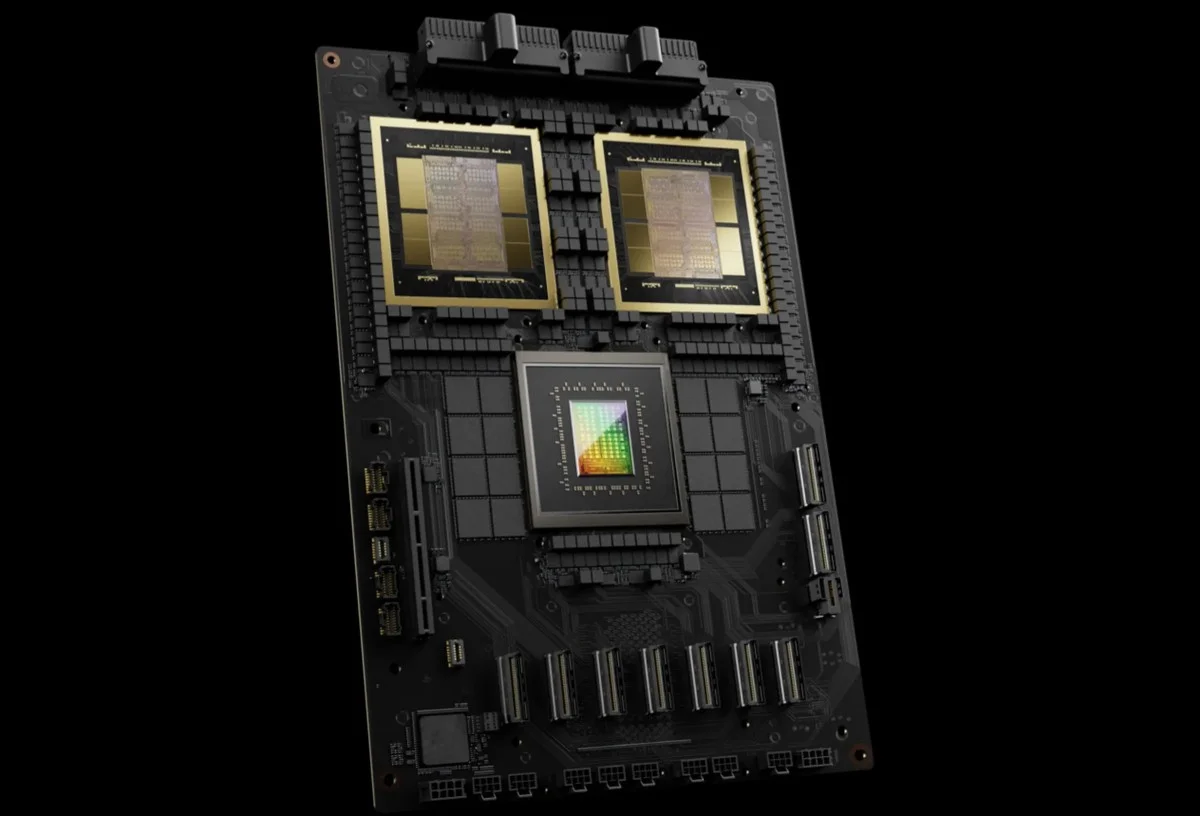
Nvidia: A Leader in AI and High-Performance Computing
Nvidia is an American technology company that has been at the forefront of innovation in the field of artificial intelligence (AI), high-performance computing, and graphics processing units (GPUs) for over three decades. Founded in 1993 by Jensen Huang, Chris Malachowsky, and Curtis Priem, Nvidia has evolved from a company focused on GPUs for video gaming to a leader in a wide range of markets, including AI, professional visualization, and supercomputing.
Executive Summary
Nvidia's success can be attributed to its strategic investments in research and development, particularly in the area of AI. The company's CUDA platform, which enables GPUs to run massively parallel programs, has been instrumental in driving the adoption of Nvidia's GPUs in the field of AI. Today, Nvidia is the largest player in the market for GPUs used in training and deploying AI models, with over 80% market share. The company's GPUs are also used in over 75% of the world's TOP500 supercomputers.
Architecture & Design
Nvidia's GPUs are designed to provide high-performance computing capabilities, with a focus on parallel processing and high-bandwidth memory. The company's latest GPUs, such as the Ampere and Volta architectures, feature advanced technologies like tensor cores, ray tracing, and variable rate shading. These technologies enable faster and more efficient processing of complex workloads, making them ideal for applications like AI, deep learning, and scientific simulations.
The Jetson Orin Nano, one of Nvidia's latest modules, is a compact and powerful AI computer designed for robotics and edge AI applications. It features a giant leap forward in performance and power efficiency, with the ability to deploy large and complex models for tasks like natural language understanding, 3D perception, and multi-sensor fusion. The module is also highly secure, with a Platform Security Controller (PSC) and a Security Engine (SE) that provide hardware acceleration for cryptographic algorithms and trusted services.
Performance & Thermal
Nvidia's GPUs are known for their high-performance capabilities, with the ability to handle complex workloads like AI, deep learning, and scientific simulations. The company's latest GPUs feature advanced cooling systems, including liquid cooling and air cooling, to ensure optimal performance and reliability. The Jetson Orin Nano, for example, is designed to operate within a wide range of temperatures, from -40°C to 85°C, making it suitable for use in harsh environments.
The module also features a range of power management features, including a Power Management Controller (PMC) that enables high-speed operation and low-power standby states. The PMC primarily controls voltage transitions for the SoC as it transitions to/from different low-power modes, and it also acts as a slave receiving dedicated power/clock request signals as well as wake events from various sources.
Market Positioning
Nvidia is the largest player in the market for GPUs used in training and deploying AI models, with over 80% market share. The company's GPUs are also used in over 75% of the world's TOP500 supercomputers. Nvidia's dominance in the market can be attributed to its strategic investments in research and development, particularly in the area of AI.
The company's products, including the GeForce and Quadro GPUs, are widely used in a range of applications, from gaming and professional visualization to scientific simulations and AI. Nvidia's software platforms, including CUDA and TensorRT, provide developers with the tools they need to create high-performance applications that can take advantage of the company's GPUs.
Verdict
Nvidia is a leader in the field of AI and high-performance computing, with a wide range of products and technologies that are driving innovation in these areas. The company's GPUs, including the Ampere and Volta architectures, provide high-performance capabilities and advanced features like tensor cores and ray tracing. The Jetson Orin Nano, one of Nvidia's latest modules, is a compact and powerful AI computer designed for robotics and edge AI applications.
With its strong market position and continued investments in research and development, Nvidia is well-positioned to maintain its leadership in the field of AI and high-performance computing. The company's products and technologies are widely used in a range of applications, from gaming and professional visualization to scientific simulations and AI, and its software platforms provide developers with the tools they need to create high-performance applications.
Specifications
| Founder | Jensen Huang, Chris Malachowsky, and Curtis Priem |
|---|---|
| Founded | 1993 |
| Headquarters | Santa Clara, California |
| Products | GeForce GPUs, Quadro GPUs, Tesla GPUs, Nvidia Drive, Nvidia Shield |
| Software | CUDA, TensorRT, Nvidia Driver |
| Market Share | 92% of discrete desktop and laptop GPU market |
| Applications | Gaming, Professional Visualization, Scientific Simulations, AI, Deep Learning |
Frequently Asked Questions
What is Nvidia's market share in the discrete desktop and laptop GPU market?
Nvidia holds a 92% share of the discrete desktop and laptop GPU market.
What is the Jetson Orin Nano?
The Jetson Orin Nano is a compact and powerful AI computer designed for robotics and edge AI applications.
What is the Platform Security Controller (PSC) in the Jetson Orin Nano?
The PSC is a highly secure subsystem that protects and manages assets, provides trusted services, and increases resilience against attacks on the SoC.