Nvidia Groq 3 LPU
Executive Summary
NVIDIA's recent acquisition of Groq has led to the development of the Groq 3 LPU, a low-latency inference accelerator designed to work in conjunction with the Vera Rubin platform. This chip is specifically designed to accelerate AI workloads, providing high aggregate token production and responsive interactive AI experiences. The Groq 3 LPU's SRAM design is expected to slash latency, transforming AI inference efficiency and speed, and significantly impacting real-world AI applications.
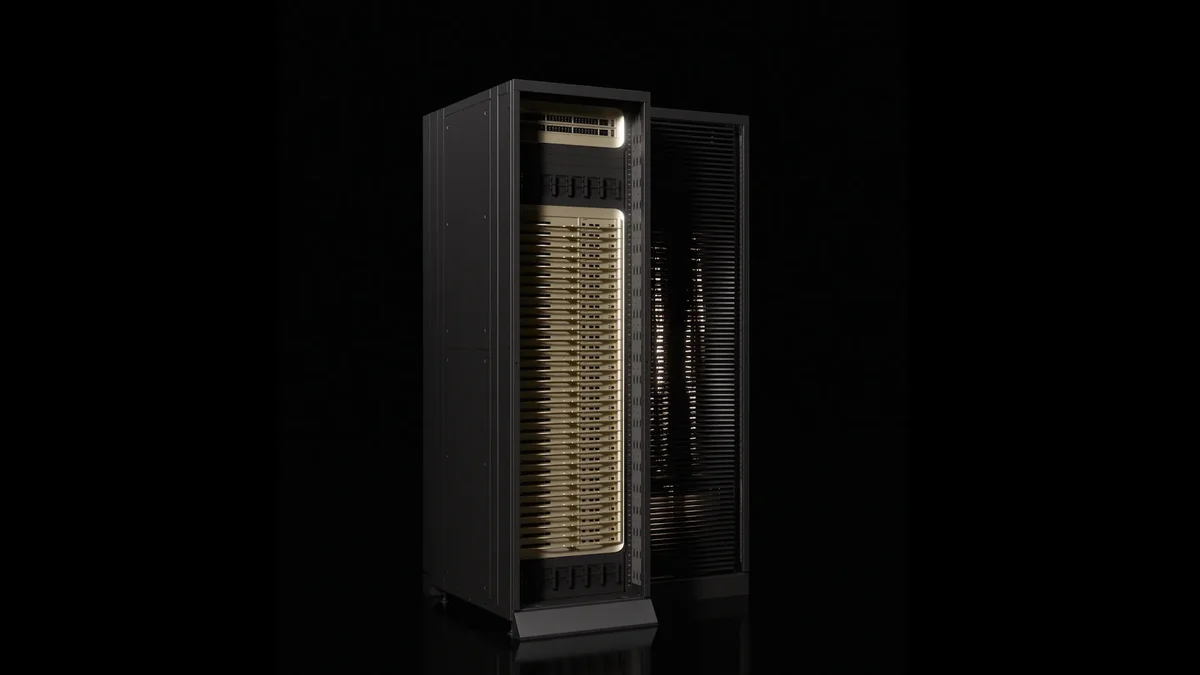
The Groq 3 LPU is part of the NVIDIA Vera Rubin platform, which aims to create a more heterogeneous inference architecture for the AI factory. The platform includes the Vera Rubin NVL72 and the LPX rack-scale accelerator, which houses 32 liquid-cooled 1U compute trays, each designed to support low-latency inference. The Groq 3 LPU is designed to work in concert with the Rubin GPU to accelerate AI workloads, providing a significant boost to decode performance at every layer of the AI model on every token.
Architecture & Design
The Groq 3 LPU is a custom silicon chip, purpose-built for inference. The chip's design focuses on keeping intelligence fast and affordable, with numerous design decisions that favor low-latency execution of tensors and other AI math over high throughput. The LPU employs a unique SRAM design that is expected to reduce latency, making it ideal for real-time AI applications.
The Groq 3 LPU is designed to work in conjunction with the Vera Rubin NVL72, delivering up to 35x higher inference throughput per megawatt. The chip is also designed to be highly scalable, with the ability to support high aggregate token production and responsive interactive AI experiences. The LPX rack-scale accelerator houses 32 liquid-cooled 1U compute trays, each designed to support low-latency inference, making it an ideal solution for large-scale AI deployments.
Performance & Thermal
The Groq 3 LPU is designed to provide exceptional compute speed, quality, and energy efficiency. The chip's SRAM design is expected to reduce latency, making it ideal for real-time AI applications. The Groq 3 LPU is also designed to be highly scalable, with the ability to support high aggregate token production and responsive interactive AI experiences.
The LPX rack-scale accelerator is designed to provide low-latency inference, with each compute tray supporting up to 256 LP30 LPUs. The accelerator is also designed to be highly efficient, with a power consumption of up to 35x higher inference throughput per megawatt. The liquid-cooled design of the compute trays also helps to reduce thermal noise, making it ideal for large-scale AI deployments.
Market Positioning
The Groq 3 LPU is positioned as a co-processor for the Vera Rubin platform, designed to accelerate AI workloads and provide low-latency inference. The chip is expected to have a significant impact on the AI industry, with its ability to slash latency and transform AI inference efficiency and speed. The Groq 3 LPU is also expected to be highly competitive in the market, with its unique SRAM design and highly scalable architecture.
The acquisition of Groq by NVIDIA has also sparked significant interest in the industry, with many speculating about how NVIDIA will integrate Groq's technology into its data center ecosystem. The Groq 3 LPU is expected to be a key part of NVIDIA's strategy to accelerate AI workloads and provide low-latency inference, and its impact on the market is expected to be significant.
Verdict
In conclusion, the Groq 3 LPU is a highly impressive chip that is expected to have a significant impact on the AI industry. Its unique SRAM design and highly scalable architecture make it ideal for real-time AI applications, and its ability to slash latency and transform AI inference efficiency and speed is expected to be a game-changer. The Groq 3 LPU is a key part of NVIDIA's strategy to accelerate AI workloads and provide low-latency inference, and its impact on the market is expected to be significant.
The Groq 3 LPU is also expected to be highly competitive in the market, with its ability to provide up to 35x higher inference throughput per megawatt. The chip's highly scalable architecture and liquid-cooled design also make it ideal for large-scale AI deployments. Overall, the Groq 3 LPU is a highly impressive chip that is expected to have a significant impact on the AI industry, and its impact on the market is expected to be felt for years to come.
Specifications
| Chip Name | Groq 3 LPU |
|---|---|
| Architecture | Custom Silicon |
| SRAM Design | Unique SRAM design to reduce latency |
| Scalability | Highly scalable, with ability to support high aggregate token production and responsive interactive AI experiences |
| Power Consumption | Up to 35x higher inference throughput per megawatt |
| Cooling | Liquid-cooled design |
Frequently Asked Questions
What is the Groq 3 LPU?
The Groq 3 LPU is a low-latency inference accelerator designed to work in conjunction with the Vera Rubin platform.
What is the unique feature of the Groq 3 LPU's SRAM design?
The Groq 3 LPU's SRAM design is expected to slash latency, transforming AI inference efficiency and speed.
How does the Groq 3 LPU work with the Vera Rubin NVL72?
The Groq 3 LPU is designed to work in concert with the Vera Rubin NVL72, delivering up to 35x higher inference throughput per megawatt.
What is the expected impact of the Groq 3 LPU on the AI industry?
The Groq 3 LPU is expected to have a significant impact on the AI industry, with its ability to slash latency and transform AI inference efficiency and speed.