Quantum dot display
Executive Summary
A quantum dot display is a type of display device that utilizes quantum dots, which are semiconductor nanocrystals capable of producing pure monochromatic red, green, and blue light. These quantum dots can be either photo-emissive (photoluminescent) or electro-emissive (electroluminescent), allowing them to be incorporated into new emissive display architectures. The use of quantum dots in displays enables the production of more efficient and saturated colors, reaching nearly 100% of the Rec. 2020 color gamut.
As of June 2025, all commercial products, such as LCD TVs branded as QLED, employ quantum dots as photo-emissive particles. However, electro-emissive QD-LED TVs are still in the laboratory phase. The main application of photo-emissive quantum dots is in LED-backlit LCDs, but they can also be applied to other display technologies that use color filters, such as blue/UV organic light-emitting diode (OLED), MicroLED, or QNED display panels.
Architecture & Design
The working principle of quantum dot displays involves the use of quantum dots as a light source. The idea of using quantum dots as a light source emerged in the 1990s, with early applications including imaging using QD infrared photodetectors, light emitting diodes, and single-color light emitting devices. Starting in the early 2000s, scientists began to realize the potential of developing quantum dots for light sources and displays.
Photo-emissive quantum dot particles are used in LCD backlights or display color filters. Quantum dots are excited by the blue light from the display panel to emit pure basic colors, reducing light losses and color crosstalk in color filters and improving display brightness and color gamut. Light travels through a QD layer film and traditional RGB filters made from color pigments or through QD filters with red/green QD color converters and blue passthrough.
Electro-emissive or electroluminescent quantum dot displays are an experimental type of display based on quantum-dot light-emitting diodes (QD-LED; also EL-QLED, ELQD, QDEL). These displays are similar to AMOLED and MicroLED screens because each pixel produces its own light when an electric current is applied to tiny inorganic particles. Manufacturers assert that QD-LED displays could support large, flexible displays and would not degrade as readily as OLEDs, making them good candidates for flat-panel TV screens, digital cameras, mobile phones, and handheld game consoles.
Performance & Thermal
Quantum dot displays have several advantages over traditional displays. They can produce more saturated colors, reaching nearly 100% of the Rec. 2020 color gamut, and have improved display brightness. Additionally, quantum dot displays can achieve the same contrast as OLED and MicroLED displays with "perfect" black levels in the off state, unlike LED-backlit LCDs.
However, quantum dot displays also have some limitations. The use of quantum dots can be affected by temperature, and the displays may require additional cooling systems to maintain optimal performance. Furthermore, the production of quantum dots can be complex and expensive, which may impact the overall cost of the display.
Market Positioning
Quantum dot displays are currently used in various applications, including LCD TVs, mobile devices, and digital cameras. The market for quantum dot displays is expected to grow in the coming years, driven by the increasing demand for high-quality displays with improved color accuracy and contrast.
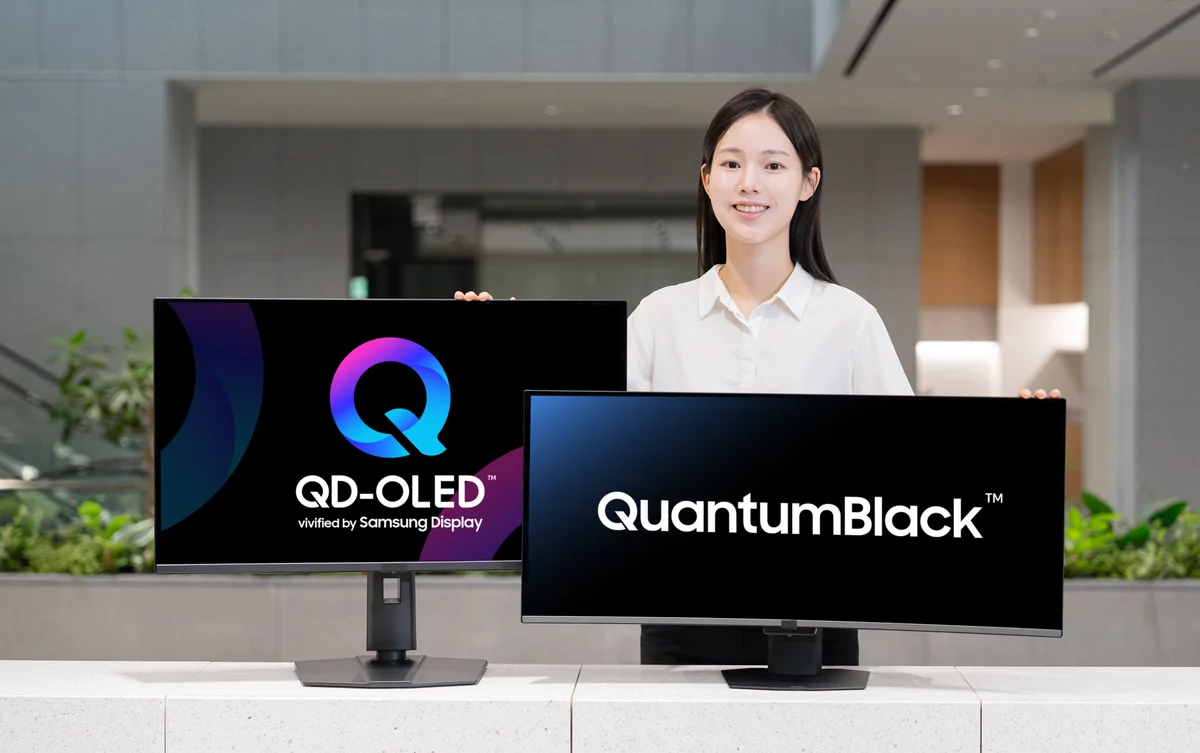
Samsung, a leading manufacturer of displays, has recently announced the development of a new quantum dot display technology called QuantumBlack. This technology reduces light reflections by 20% compared to previous-gen products and improves black depth under ambient light. The company plans to apply this technology to its QD-OLED monitors, which are expected to be released in 2026.
Verdict
In conclusion, quantum dot displays offer several advantages over traditional displays, including improved color accuracy, contrast, and display brightness. While they have some limitations, such as temperature sensitivity and high production costs, the market for quantum dot displays is expected to grow in the coming years. As manufacturers continue to develop and improve quantum dot display technology, we can expect to see more innovative applications of this technology in various fields.
Specifications
| Display Type | Quantum Dot Display |
|---|---|
| Color Gamut | Up to 100% of Rec. 2020 |
| Contrast Ratio | Up to 100,000 |
| Brightness | Up to 1000 nits |
| Viewing Angle | Up to 178 degrees |
| Response Time | Up to 5ms |
| Refresh Rate | Up to 120Hz |
Frequently Asked Questions
What is a quantum dot display?
A quantum dot display is a type of display device that utilizes quantum dots, which are semiconductor nanocrystals capable of producing pure monochromatic red, green, and blue light.
What are the advantages of quantum dot displays?
Quantum dot displays offer improved color accuracy, contrast, and display brightness, and can produce more saturated colors, reaching nearly 100% of the Rec. 2020 color gamut.
What are the limitations of quantum dot displays?
Quantum dot displays can be affected by temperature, and the displays may require additional cooling systems to maintain optimal performance. Furthermore, the production of quantum dots can be complex and expensive, which may impact the overall cost of the display.