Radeon RX 9000 series
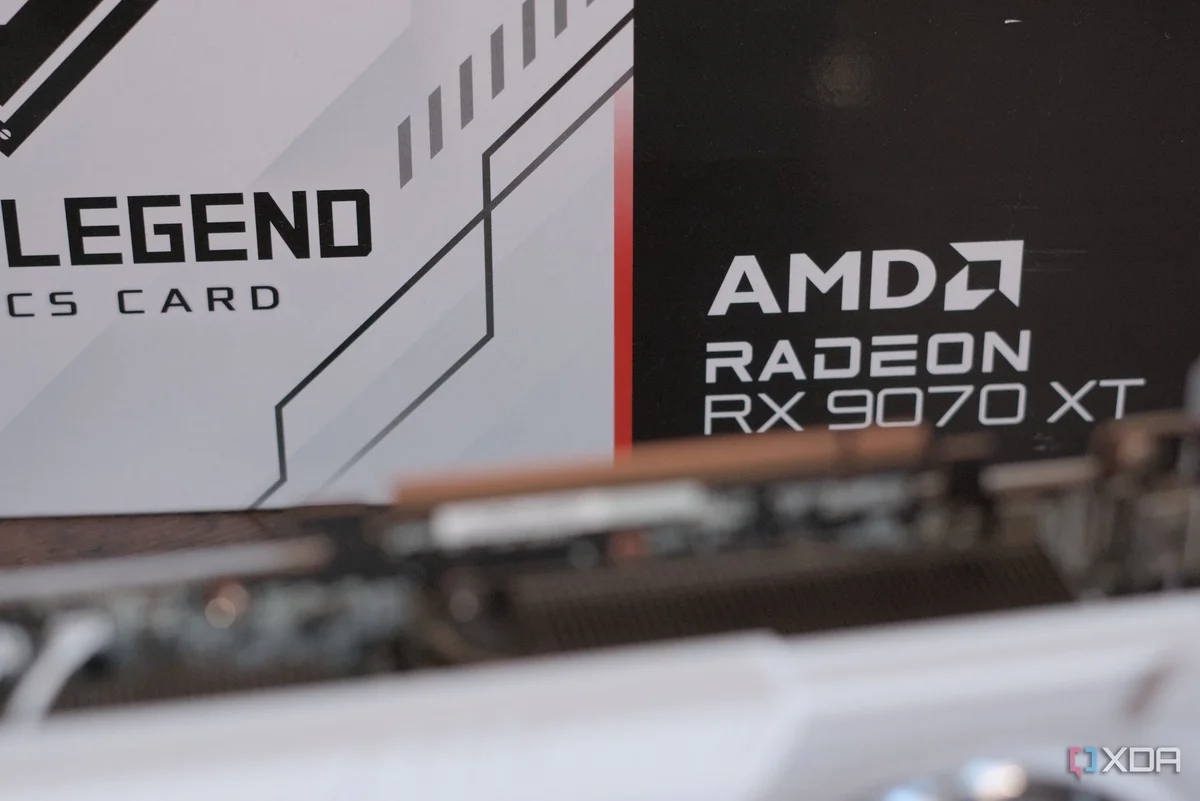
Executive Summary
The Radeon RX 9000 series is a line of consumer graphics processing units (GPUs) developed by AMD, based on the RDNA 4 architecture. This series targets the mainstream segment and is the successor to the Radeon RX 7000 series. With a focus on improved ray tracing performance and expanded AI acceleration capabilities, the Radeon RX 9000 series aims to deliver high-quality visuals and advanced features for ultra-fast gaming. The RDNA 4 architecture is built on the TSMC 4 nm process, incorporating redesigned 3rd generation Raytracing Accelerators for enhanced ray tracing performance and image quality. Additionally, it features 2nd Generation AI Accelerators with support for FP16, INT8 operations, and sparsity acceleration, enabling up to 4× FP16 and 8× INT8 throughput for AI workloads. The AMD HYPR-RX1 technology combines Radeon Super Resolution, FidelityFX Super Resolution 4, Radeon Anti-Lag 24, Radeon Boost, and AMD Fluid Motion Frames 2.1 for advanced AI-based upscaling and frame generation. The Radeon RX 9000 series supports PCIe 5.0 for high-bandwidth GPU-to-CPU communication and features DisplayPort 2.1a and HDMI 2.1b for high refresh rates and resolutions. The series also includes the 3rd generation of AMD Infinity Cache, with up to 64 MB cache to reduce memory latency and increase bandwidth efficiency. The memory subsystem supports up to 16 GB GDDR6 with up to 640 GB/s memory bandwidth, depending on the model and interface width.Architecture & Design
The RDNA 4 architecture is the foundation of the Radeon RX 9000 series, emphasizing improved ray tracing performance and expanded AI acceleration capabilities. The architecture is built on the TSMC 4 nm process, which provides a monolithic design after the RDNA 3 chip structure. This design change is expected to enhance performance and efficiency. The Radeon RX 9000 series features redesigned 3rd generation Raytracing Accelerators, which are designed to improve ray tracing performance and image quality. The series also includes 2nd Generation AI Accelerators with support for FP16, INT8 operations, and sparsity acceleration. These accelerators enable up to 4× FP16 and 8× INT8 throughput for AI workloads, making them suitable for applications that rely heavily on AI processing. The AMD HYPR-RX1 technology is another key component of the Radeon RX 9000 series. This technology combines Radeon Super Resolution, FidelityFX Super Resolution 4, Radeon Anti-Lag 24, Radeon Boost, and AMD Fluid Motion Frames 2.1 for advanced AI-based upscaling and frame generation. The result is improved performance and visual quality in supported games and applications. The Radeon RX 9000 series supports PCIe 5.0, which provides high-bandwidth GPU-to-CPU communication. This support enables faster data transfer between the GPU and CPU, resulting in improved overall system performance. The series also features DisplayPort 2.1a and HDMI 2.1b, which support high refresh rates and resolutions. The 3rd generation of AMD Infinity Cache is included in the Radeon RX 9000 series, with up to 64 MB cache. This cache reduces memory latency and increases bandwidth efficiency, resulting in improved performance in applications that rely heavily on memory access. The memory subsystem supports up to 16 GB GDDR6 with up to 640 GB/s memory bandwidth, depending on the model and interface width.Performance & Thermal
The performance of the Radeon RX 9000 series is expected to be high, given its advanced architecture and features. However, specific performance benchmarks are not publicly disclosed in the provided research material. The thermal performance of the series is also not fully detailed, although it is mentioned that the Radeon RX 9070 XT can reach temperatures of almost 90°C on VRAM during full load. The power consumption of the Radeon RX 9000 series is not publicly disclosed, but the recommended power supply for the ASUS AMD Radeon RX 9070 XT 16GB Prime OC is 850 W. The energy consumption of the Gigabyte Radeon RX 9070 XT AORUS ELITE is 340 W.Market Positioning
The Radeon RX 9000 series is positioned as a mainstream product, targeting midrange performance and value rather than competing with Nvidia at the high-end. This approach is similar to the RX 5000 series in 2019. The pricing of the series is not publicly disclosed in the provided research material, but it is mentioned that the ASUS TUF Radeon RX 9070 XT OC is expected to be sold at a base price. The Radeon RX 9000 series has been compared to the Nvidia GeForce RTX 5070 in some benchmarks, with the AMD Radeon RX 9070 offering better results in the Fire Streak test. However, the Radeon RX 9070 XT is mentioned to be very competitive with the RTX 5070 Ti but slightly below it in some tests.Verdict
The Radeon RX 9000 series is a significant release from AMD, offering improved ray tracing performance, expanded AI acceleration capabilities, and advanced features for ultra-fast gaming. While specific performance benchmarks and pricing are not publicly disclosed, the series is expected to provide high-quality visuals and competitive performance in the mainstream market. As with any new product release, it is essential to consider factors such as power consumption, thermal performance, and market positioning when making a purchasing decision. The Radeon RX 9000 series is an exciting development in the world of consumer GPUs, and its impact on the market will be worth watching in the coming months.Specifications
| Architecture | RDNA 4 |
|---|---|
| Process Node | TSMC 4 nm |
| Raytracing Accelerators | 3rd generation |
| AI Accelerators | 2nd Generation |
| Memory | Up to 16 GB GDDR6 |
| Memory Bandwidth | Up to 640 GB/s |
| PCIe Support | PCIe 5.0 |
| Display Connectivity | DisplayPort 2.1a, HDMI 2.1b |
| Cache | Up to 64 MB AMD Infinity Cache |
| Energy Consumption (Gigabyte Radeon RX 9070 XT AORUS ELITE) | 340 W |
| Recommended Power Supply (ASUS AMD Radeon RX 9070 XT 16GB Prime OC) | 850 W |
Frequently Asked Questions
What is the RDNA 4 architecture?
The RDNA 4 architecture is the foundation of the Radeon RX 9000 series, emphasizing improved ray tracing performance and expanded AI acceleration capabilities.
What is the process node used in the RDNA 4 architecture?
The RDNA 4 architecture is built on the TSMC 4 nm process.
What is the AMD HYPR-RX1 technology?
The AMD HYPR-RX1 technology combines Radeon Super Resolution, FidelityFX Super Resolution 4, Radeon Anti-Lag 24, Radeon Boost, and AMD Fluid Motion Frames 2.1 for advanced AI-based upscaling and frame generation.
What is the maximum memory bandwidth of the Radeon RX 9000 series?
The maximum memory bandwidth of the Radeon RX 9000 series is up to 640 GB/s.
What is the recommended power supply for the ASUS AMD Radeon RX 9070 XT 16GB Prime OC?
The recommended power supply for the ASUS AMD Radeon RX 9070 XT 16GB Prime OC is 850 W.