Raspberry Pi
Executive Summary
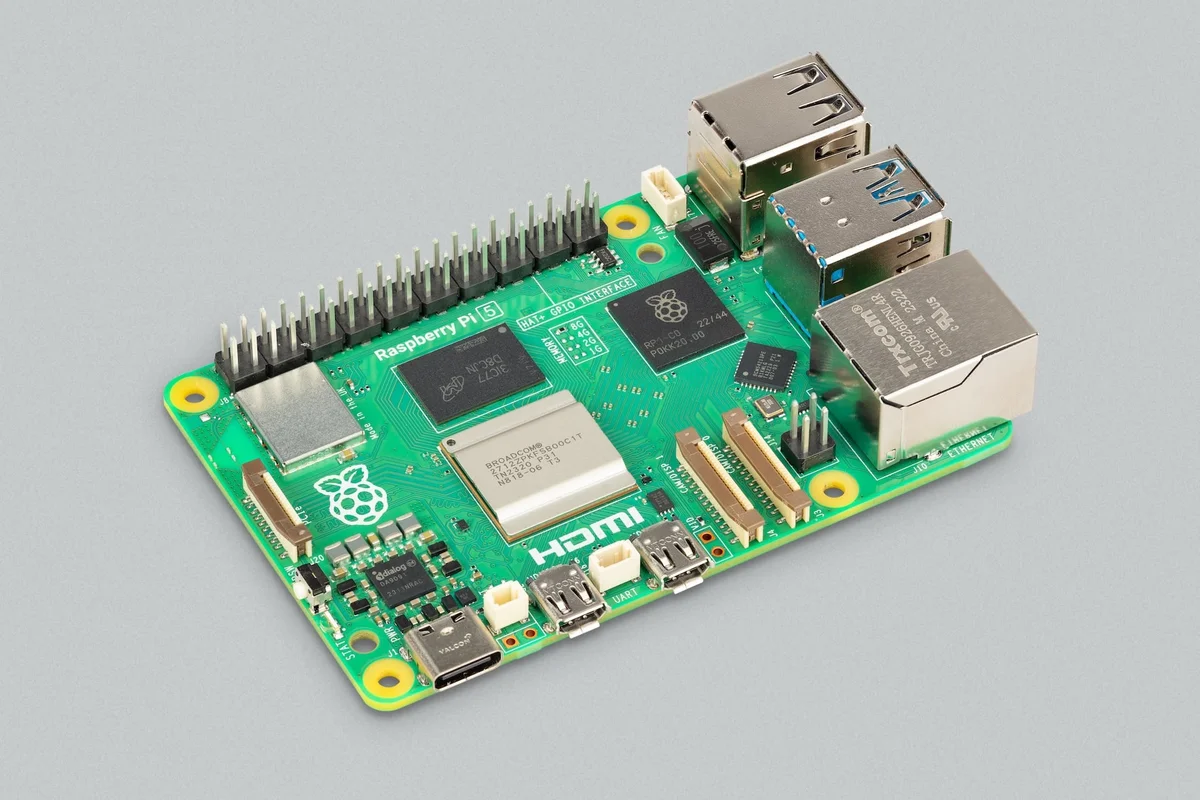
The Raspberry Pi is a series of small single-board computers (SBCs) originally developed in the United Kingdom by the Raspberry Pi Foundation in collaboration with Broadcom. The Raspberry Pi was originally created to help teach computer science in schools but gained popularity for many other uses due to its low cost, compact size, and flexibility. It is now used in areas such as industrial automation, robotics, home automation, IoT devices, and hobbyist projects. The company's products range from simple microcontrollers to computers that the company markets as being powerful enough to be used as a general-purpose PC. Computers are built around a custom-designed system on a chip and offer features such as HDMI video/audio output, USB ports, wireless networking, GPIO pins, and up to 16 GB of RAM. Storage is typically provided via microSD cards. As of March 2025, 68 million units had been sold, making the Raspberry Pi one of the most popular single-board computers on the market. The latest model, the Raspberry Pi 5, features an upgraded CPU and GPU, up to 16 GB of RAM, a PCIe interface for fast peripherals, and an in-house designed southbridge chip.Architecture & Design
The Raspberry Pi 5 is built around a custom-designed system on a chip, featuring a Quad-core ARM Cortex-A76 processor at 2.4 GHz (Broadcom BCM2712) of 64-bits. This provides a significant increase in performance compared to its predecessors, such as the Raspberry Pi 4, which features a Quad-core ARM Cortex-A72 processor at 1.8 GHz. The Raspberry Pi 5 also features a new chip dedicated to the IO and peripherals, called the RP1. This chip is responsible for managing all the peripherals, including USB 3.0, Ethernet Gigabit, GPIO, and MIPI display and camera interfaces. The RP1 provides improved bandwidth and performance for these interfaces, allowing for faster data transfer and improved overall system performance. The Raspberry Pi 5 also features Wi-Fi 2.4 and 5 GHz with Bluetooth 5.2 BLE, as well as USB 2.0 and 3.0 ports, and CSI connectors for cameras and MIPI devices. The Raspberry Pi 5 does not have an audio output connector, but this can be addressed by using a USB sound card.Performance & Thermal
The performance of the Raspberry Pi 5 is significantly improved compared to its predecessors, thanks to the upgraded CPU and GPU. However, the exact performance metrics, such as benchmark scores, are not publicly disclosed in the research material. The thermal performance of the Raspberry Pi 5 is also an important consideration, especially for applications that require sustained operation. According to the research, the Raspberry Pi 5 runs warmer than the Raspberry Pi 4 under sustained load. However, the exact thermal design power (TDP) is not publicly disclosed.Market Positioning
The Raspberry Pi 5 is positioned as a high-performance single-board computer, suitable for a wide range of applications, from hobbyist projects to industrial automation and IoT devices. The pricing of the Raspberry Pi 5 is not publicly disclosed in the research material, but it is likely to be competitive with other single-board computers on the market. The Raspberry Pi 5 is also part of a larger ecosystem of products and services, including the Raspberry Pi Foundation's educational resources and community support. This ecosystem provides a comprehensive platform for users to learn, develop, and deploy their projects, making the Raspberry Pi 5 an attractive choice for many users.Verdict
The Raspberry Pi 5 is a significant improvement over its predecessors, offering upgraded performance, new features, and improved peripherals. While some specifications, such as the exact performance metrics and pricing, are not publicly disclosed, the Raspberry Pi 5 is likely to be a popular choice for many users, from hobbyists to industrial automation and IoT professionals. The Raspberry Pi 5's architecture and design provide a solid foundation for a wide range of applications, and the new RP1 chip provides improved bandwidth and performance for peripherals. However, the thermal performance of the Raspberry Pi 5 is an important consideration, and users should ensure that their applications are designed to operate within the thermal limits of the device. Overall, the Raspberry Pi 5 is a powerful and flexible single-board computer that is well-suited to a wide range of applications. While some specifications may be missing, the Raspberry Pi 5 is likely to be a popular choice for many users, and its ecosystem of products and services provides a comprehensive platform for learning, development, and deployment.Specifications
| Processor | Quad-core ARM Cortex-A76 at 2.4 GHz (Broadcom BCM2712) of 64-bits |
|---|---|
| RAM | up to 16 GB |
| Storage | microSD cards |
| Wi-Fi | 2.4 and 5 GHz with Bluetooth 5.2 BLE |
| USB ports | USB 2.0 and 3.0 |
| CSI connectors | for cameras and MIPI devices |
| GPIO pins | yes |
| HDMI video/audio output | yes |
| Ethernet | Gigabit |
| RP1 chip | dedicated to IO and peripherals |
Frequently Asked Questions
What is the Raspberry Pi 5's processor?
The Raspberry Pi 5 features a Quad-core ARM Cortex-A76 processor at 2.4 GHz (Broadcom BCM2712) of 64-bits.
How much RAM does the Raspberry Pi 5 have?
The Raspberry Pi 5 has up to 16 GB of RAM.
What type of storage does the Raspberry Pi 5 use?
The Raspberry Pi 5 uses microSD cards for storage.
Does the Raspberry Pi 5 have Wi-Fi and Bluetooth?
Yes, the Raspberry Pi 5 has Wi-Fi 2.4 and 5 GHz with Bluetooth 5.2 BLE.
What type of USB ports does the Raspberry Pi 5 have?
The Raspberry Pi 5 has USB 2.0 and 3.0 ports.