RDNA 3
2022 Deep Dive: AMD RDNA 3 GPU Microarchitecture for Computing
Executive Summary
AMD's RDNA 3 is a groundbreaking GPU microarchitecture that marks a significant leap forward in the company's graphics processing technology. Unveiled on November 3, 2022, RDNA 3 is designed to provide a substantial performance-per-watt uplift of over 50% compared to its predecessor. This is achieved through the innovative use of chiplet packaging, a design approach that allows for the fabrication of different components on optimized process nodes. The RDNA 3 architecture is built using a 5 nm process and features a modular design, comprising Graphics Compute Dies (GCDs) and Memory Cache Dies (MCDs). This modular approach enables better yield management, reduced power consumption, and increased performance.
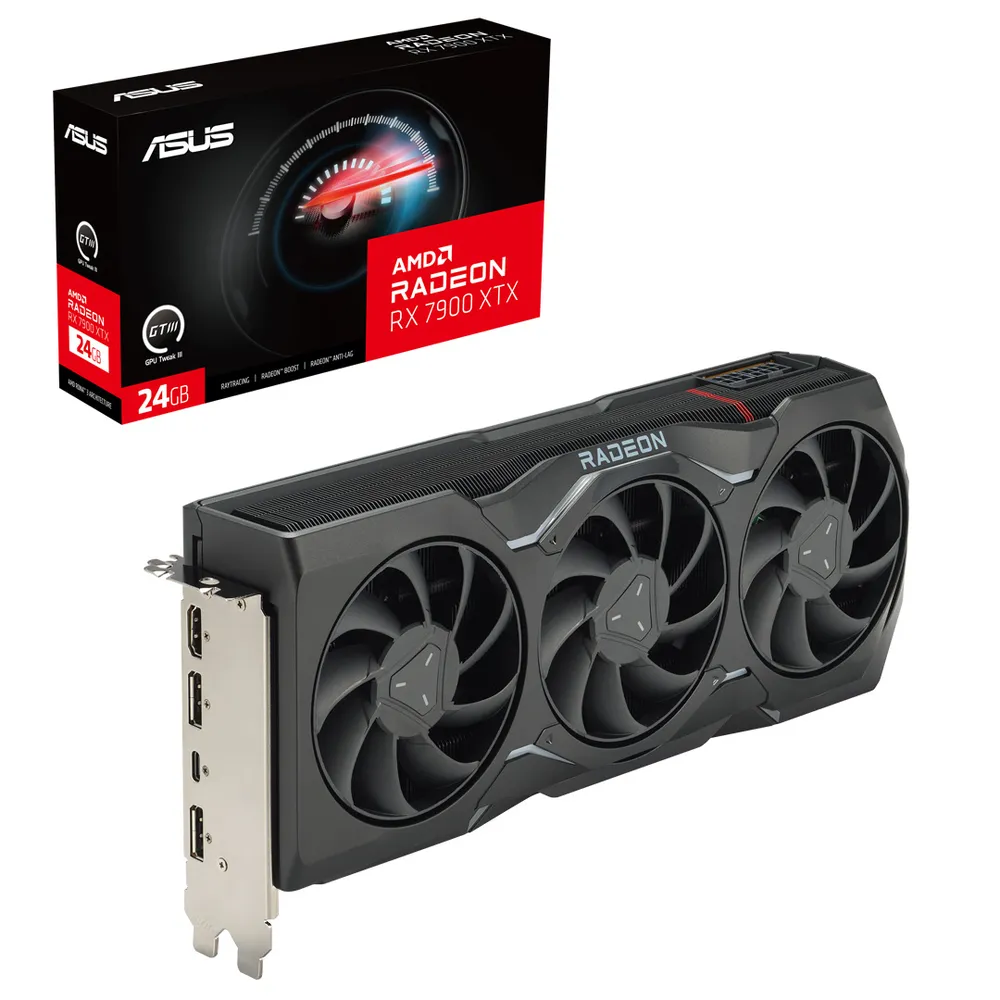
The RDNA 3 microarchitecture is featured in the Radeon RX 7000 series, which includes the RX 7900 XTX, a flagship model designed to offer the ultimate gaming experience. With 24 GB of GDDR6 memory and a memory bandwidth of 960 GB/s, the RX 7900 XTX is well-equipped to handle demanding games at high resolutions. The RDNA 3 architecture also supports hardware ray tracing, AMD FidelityFX Super Resolution technology, and other advanced features that enhance gaming performance and visuals.
Architecture & Design
The RDNA 3 architecture represents a significant departure from traditional monolithic GPU designs. By adopting a chiplet-based approach, AMD can optimize different components for specific process nodes, reducing power consumption and increasing yield. The GCDs, which contain the graphics processing units, are fabricated on a 5 nm process, while the MCDs, which provide memory caching, can be built on a more mature and cost-effective node.
The use of chiplets in RDNA 3 allows for greater flexibility in design and manufacturing. Each chiplet can be optimized for its specific function, enabling better performance, power efficiency, and yield. The modular design also facilitates the development of multiple product variants, as different combinations of GCDs and MCDs can be used to create distinct GPU models. This approach enables AMD to address a broader range of market segments and applications, from gaming and graphics to compute and AI workloads.
The RDNA 3 architecture features a high-bandwidth interconnect, known as the Integrated Fan-Out Re-Distribution Layer (IFOR), which connects the GCDs and MCDs. This interconnect provides a high-speed interface for data transfer between the different chiplets, minimizing latency and maximizing overall system performance. The IFOR is a critical component of the RDNA 3 design, enabling the efficient exchange of data between the graphics processing units, memory, and other system components.
Performance & Thermal
The RDNA 3 architecture is designed to deliver exceptional performance and power efficiency. The Radeon RX 7900 XTX, which is based on the RDNA 3 microarchitecture, features a boost clock speed of up to 2500 MHz and a game clock speed of up to 2300 MHz. The GPU also supports hardware ray tracing, AMD FidelityFX Super Resolution technology, and other advanced features that enhance gaming performance and visuals.
In terms of thermal performance, the RDNA 3 architecture is designed to operate within a relatively low thermal envelope. The Radeon RX 7900 XTX has a typical board power of 355W, which is comparable to other high-end graphics cards. However, the RDNA 3 design is optimized for power efficiency, with a focus on minimizing power consumption while maintaining high performance levels. This is achieved through the use of advanced power management techniques, including dynamic voltage and frequency scaling, as well as the optimization of the GPU's clock speeds and voltage levels.
The thermal solution used in the Radeon RX 7900 XTX is designed to provide efficient cooling and minimize noise levels. The GPU features a triple-fan cooling system, which provides a high airflow rate and efficient heat transfer. The cooling system is also designed to be compact and lightweight, making it suitable for use in a variety of system configurations.
Market Positioning
The RDNA 3 architecture is positioned as a high-end GPU solution, targeting the gaming and graphics markets. The Radeon RX 7900 XTX is designed to compete with other high-end graphics cards, including the NVIDIA GeForce RTX 4080 and RTX 4090. The RDNA 3 architecture is also expected to be used in a variety of other applications, including compute, AI, and professional graphics workloads.
The target buyer for the Radeon RX 7900 XTX is the serious gamer or graphics professional who requires high-performance graphics capabilities. The GPU is designed to provide exceptional performance, power efficiency, and features, making it an attractive option for those who demand the best. The RDNA 3 architecture is also expected to be used in a variety of other markets, including the datacenter and cloud computing segments, where its high performance, power efficiency, and scalability make it an attractive solution.
Verdict
The RDNA 3 architecture represents a significant milestone in the development of GPU technology. With its modular design, high-bandwidth interconnect, and optimized power management, the RDNA 3 microarchitecture is well-suited to meet the demands of modern gaming and graphics workloads. The Radeon RX 7900 XTX, which is based on the RDNA 3 architecture, provides exceptional performance, power efficiency, and features, making it an attractive option for serious gamers and graphics professionals.
However, the RDNA 3 architecture is not without its limitations. The use of chiplets can introduce additional complexity and cost, and the GPU's power consumption and thermal performance may be affected by the specific system configuration and workload. Additionally, the RDNA 3 architecture may not be compatible with all existing systems and software, which could limit its adoption in certain markets.
Specifications
Technical Specifications
| Specification | Detail |
|---|---|
| Architecture | RDNA 3 |
| Process Node | 5 nm |
| Memory | 24 GB GDDR6 |
| Memory Bandwidth | 960 GB/s |
| Boost Clock Speed | up to 2500 MHz |
| Game Clock Speed | up to 2300 MHz |
| Typical Board Power | 355W |
Frequently Asked Questions
Frequently Asked Questions
What is the RDNA 3 architecture?
The RDNA 3 architecture is a GPU microarchitecture designed by AMD, featuring a modular design with chiplets, a high-bandwidth interconnect, and optimized power management.
What are the key features of the Radeon RX 7900 XTX?
The Radeon RX 7900 XTX features a boost clock speed of up to 2500 MHz, a game clock speed of up to 2300 MHz, 24 GB of GDDR6 memory, and a memory bandwidth of 960 GB/s.
What is the target market for the RDNA 3 architecture?
The RDNA 3 architecture is targeted at the gaming and graphics markets, with the Radeon RX 7900 XTX designed to compete with other high-end graphics cards.
What are the benefits of the chiplet design in the RDNA 3 architecture?
The chiplet design in the RDNA 3 architecture allows for greater flexibility in design and manufacturing, enabling better performance, power efficiency, and yield. It also facilitates the development of multiple product variants and enables the optimization of different components for specific process nodes.