RME HDSPe AIO
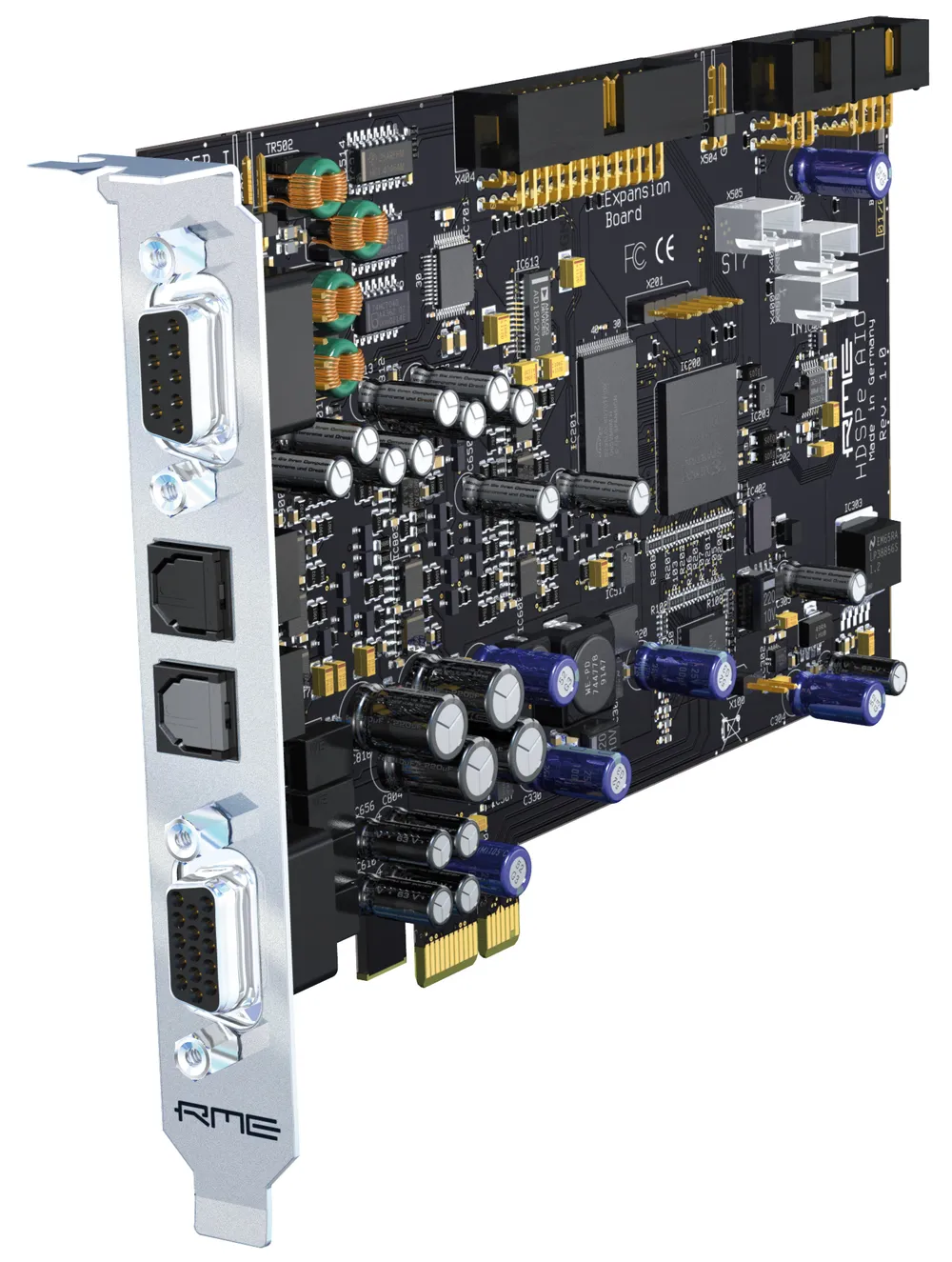
Introduction to the RME HDSPe AIO
The RME HDSPe AIO is a PCIe audio interface card that offers 32 channels of 24-bit audio at sample rates of up to 192 kHz. It is designed to provide high-quality audio and reliability, making it suitable for a range of professional applications. The interface features a range of connectivity options, including ADAT optical, TOSLINK, and analog inputs and outputs.Key Features and Technologies
The RME HDSPe AIO features a range of advanced technologies and features that make it an ideal choice for professional audio applications. These include: - RME's proprietary SteadyClock technology, which provides maximum jitter suppression and varipitch capabilities - Support for the additional TCO standard for timecode synchronization (LTC/video) - The versatile TotalMix mixer, allowing for flexible routing and mixing of audio signals - Lock Range: 28 kHz – 200 kHz - ADAT Optical: 1 x TOSLINK, format according to Alesis specification - Standard: 8 channels 24 bit, up to 48 kHzTechnical Specifications
What is the sample rate of the RME HDSPe AIO?
The RME HDSPe AIO has a sample rate of up to 192 kHz.
What is the bit depth of the RME HDSPe AIO?The RME HDSPe AIO has a bit depth of 24-bit.
How many channels does the RME HDSPe AIO support?The RME HDSPe AIO supports 32 channels.
What connectivity options are available on the RME HDSPe AIO?The RME HDSPe AIO features ADAT optical, TOSLINK, and analog inputs and outputs.
What is SteadyClock technology?SteadyClock technology is RME's proprietary technology that provides maximum jitter suppression and varipitch capabilities.
Specifications
| Specification | Value |
|---|---|
| Sample Rate | Up to 192 kHz |
| Bit Depth | 24-bit |
| Number of Channels | 32 |
| Connectivity Options | ADAT optical, TOSLINK, analog inputs and outputs |
| SteadyClock Technology | Maximum jitter suppression and varipitch capabilities |
| Timecode Synchronization | Support for TCO standard (LTC/video) |
| Mixer | TotalMix mixer |
| Lock Range | 28 kHz – 200 kHz |