Rubin (microarchitecture)
Executive Summary
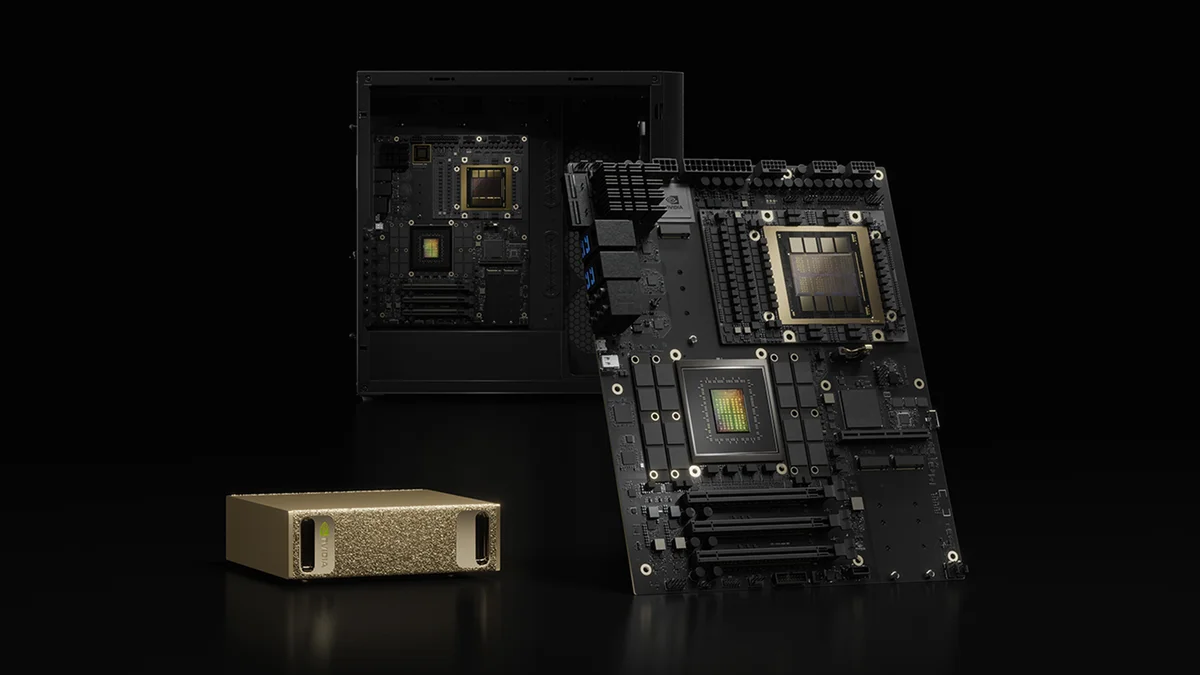
Rubin is a microarchitecture for graphics processing units (GPUs) by Nvidia, announced at Computex in Taipei in 2024 by CEO Jensen Huang. It is named after the astrophysicist Vera Rubin and will consist of a GPU named Rubin and a CPU named Vera. The chips will be manufactured by TSMC using a 3 nm process and will use HBM4 memory. This new microarchitecture is significant as it represents Nvidia's continued push into the high-performance computing market, particularly in the realm of artificial intelligence (AI) and machine learning (ML). The Rubin microarchitecture is scheduled for release in Q3 of 2026, marking a crucial step in Nvidia's roadmap for advancing GPU technology. With the increasing demand for powerful computing solutions in fields like AI, data analytics, and scientific research, the introduction of Rubin is timely. It aims to provide the necessary performance boost and efficiency improvements that these applications require.Architecture & Design
The Rubin microarchitecture is designed to provide significant performance improvements over its predecessors. It is engineered to work in conjunction with a CPU named Vera, forming a comprehensive computing solution. The manufacturing process for Rubin involves TSMC's 3 nm technology, which is expected to bring about reductions in power consumption and increases in transistor density. This advancement in manufacturing technology is crucial for achieving higher performance levels without a proportional increase in power consumption. One of the notable aspects of the Rubin microarchitecture is its use of HBM4 memory. High-Bandwidth Memory (HBM) is a type of memory interface that is designed to provide very high bandwidth while also reducing power consumption. The use of HBM4 in Rubin suggests that Nvidia is focusing on delivering high memory bandwidth to support the demanding requirements of AI and ML workloads. Nvidia is utilizing Blackwell GPUs to accelerate the design of Vera, Rubin, and Rubin's successor, Feynman. This approach highlights the complexity and the iterative nature of designing new microarchitectures. By leveraging existing GPU architectures to design future ones, Nvidia can potentially reduce development time and improve the overall efficiency of the design process.Performance & Thermal
The Rubin microarchitecture is said to have 50 petaflops performance in FP4 (4-bit floating point math), which is often used for AI applications. This represents a significant increase from the 20 petaflops performance of the Blackwell microarchitecture. Furthermore, Nvidia has announced a future iteration of Rubin, known as Rubin Ultra, which is expected to double the performance of Rubin, achieving 100 petaflops. The thermal design and power consumption of Rubin are areas of interest, given the high performance levels it aims to achieve. While specific details on the thermal design power (TDP) of Rubin are not publicly disclosed, the use of a 3 nm manufacturing process and HBM4 memory suggests that Nvidia is working to balance performance with power efficiency. The announcement of Rubin Ultra, which would essentially be two Rubin cores connected together, indicates Nvidia's strategy to continue pushing the boundaries of performance. This approach, however, also raises questions about power consumption and heat dissipation, especially considering the target performance of 100 petaflops.Market Positioning
The market positioning of Rubin and Rubin Ultra is centered around high-performance computing applications, particularly in the AI and ML sectors. Nvidia's strategy involves not just the development of powerful GPUs but also the creation of comprehensive solutions that include CPUs, memory, and infrastructure designed to support these workloads. The mention of Kyber racks and the NVL576 Kyber infrastructure in the context of Rubin Ultra suggests that Nvidia is planning for the deployment of these high-performance GPUs in datacenter environments. The fact that these solutions are expected to consume up to 600 kW per rack underscores the scale at which Nvidia is planning to support high-performance computing.Verdict
The Rubin microarchitecture represents a significant step forward for Nvidia in the realm of high-performance computing. With its focus on AI and ML workloads, Rubin is poised to play a critical role in advancing these fields. The announcement of Rubin Ultra further emphasizes Nvidia's commitment to pushing the boundaries of what is possible with GPU technology. While the details provided give a glimpse into the potential of Rubin and Rubin Ultra, there are still many aspects that are not publicly disclosed. The actual performance, power consumption, and pricing of these products will be critical in determining their success in the market. Nonetheless, based on the information available, it is clear that Nvidia is aggressively pursuing innovation in the high-performance computing sector, and the Rubin microarchitecture is a key part of this strategy. As the computing industry continues to evolve, with an increasing emphasis on AI, ML, and data analytics, the demand for high-performance, efficient computing solutions will only grow. Nvidia's Rubin microarchitecture, along with its associated technologies and infrastructure, is well-positioned to meet this demand and drive further innovation in these fields. The future of high-performance computing is closely tied to the development of microarchitectures like Rubin. As Nvidia and other industry leaders continue to push the boundaries of what is possible with GPU technology, we can expect to see significant advancements in a wide range of applications, from scientific research and healthcare to finance and entertainment. In conclusion, the Rubin microarchitecture is an important development in the field of high-performance computing. Its focus on AI and ML workloads, combined with Nvidia's comprehensive approach to supporting these applications, makes it a significant player in the market. As more details become available, it will be interesting to see how Rubin and Rubin Ultra perform in real-world scenarios and how they contribute to the advancement of high-performance computing. The impact of Rubin on the industry will also be worth observing. As a leading technology company, Nvidia's innovations often set the stage for future developments. The adoption of Rubin and similar microarchitectures by other companies could lead to a new wave of high-performance computing solutions, further accelerating progress in AI, ML, and other fields. In the context of Nvidia's overall strategy, the Rubin microarchitecture is a key component. It reflects the company's commitment to innovation and its focus on delivering high-performance computing solutions that meet the evolving needs of its customers. As the demand for powerful, efficient computing continues to grow, Nvidia is well-positioned to capitalize on this trend with technologies like Rubin. The development of Rubin also highlights the importance of collaboration and ecosystem development in the technology industry. Nvidia's work with TSMC on the 3 nm manufacturing process and its use of HBM4 memory demonstrate the value of partnerships in driving innovation. As the industry continues to evolve, we can expect to see more collaborations and alliances aimed at advancing high-performance computing. In summary, the Rubin microarchitecture is a significant development in the field of high-performance computing. Its focus on AI and ML workloads, combined with Nvidia's comprehensive approach to supporting these applications, makes it an important player in the market. As the industry continues to evolve, it will be interesting to see how Rubin and similar technologies contribute to the advancement of high-performance computing and drive innovation in a wide range of fields. The future of computing is closely tied to the development of microarchitectures like Rubin. As industry leaders continue to push the boundaries of what is possible with GPU technology, we can expect to see significant advancements in a wide range of applications. The Rubin microarchitecture is an important step in this journey, and its impact will be felt across the industry. As we look to the future, it is clear that high-performance computing will play an increasingly important role in driving innovation. The development of microarchitectures like Rubin is crucial to this effort, as they provide the necessary performance and efficiency improvements to support demanding applications. Nvidia's commitment to innovation and its focus on delivering high-performance computing solutions position it well for the future. The Rubin microarchitecture is an exciting development in the field of high-performance computing. Its potential to drive innovation in AI, ML, and other fields is significant, and its impact will be felt across the industry. As we continue to push the boundaries of what is possible with computing, technologies like Rubin will play a critical role in shaping the future.Specifications
| Microarchitecture | Rubin |
|---|---|
| Manufacturer | TSMC |
| Process Node | 3 nm |
| Memory | HBM4 |
| Performance (FP4) | 50 petaflops |
| Successor | Feynman |
| Rubin Ultra Performance | 100 petaflops |
Frequently Asked Questions
What is the Rubin microarchitecture?
The Rubin microarchitecture is a design for graphics processing units (GPUs) by Nvidia, announced in 2024.
What process node is used to manufacture Rubin?
The Rubin microarchitecture is manufactured using a 3 nm process by TSMC.
What type of memory does Rubin use?
Rubin uses HBM4 memory.
What is the performance of Rubin in FP4?
Rubin has a performance of 50 petaflops in FP4.
What is Rubin Ultra?
Rubin Ultra is an improved version of the Rubin microarchitecture, expected to double the performance of Rubin, achieving 100 petaflops.