SK Hynix
SK Hynix: A Deep Dive into the World of High-Bandwidth Memory
SK Hynix is a South Korean semiconductor company that has been at the forefront of memory technology for decades. Founded in 1983 as Hyundai Electronics, the company has undergone significant transformations over the years, including its integration into the SK Group in 2012. Today, SK Hynix is one of the world's largest semiconductor vendors, alongside Samsung Electronics, and is a major player in the memory market.
With a strong focus on research and development, SK Hynix has established itself as a leader in the development of dynamic random-access memory (DRAM) and flash memory chips. The company's products are used in a wide range of applications, including personal computers, mobile devices, servers, and data centers. As the demand for high-bandwidth memory solutions continues to grow, SK Hynix is well-positioned to meet the needs of its customers.
Executive Summary
SK Hynix has established itself as a leader in the memory industry, with a strong focus on dynamic random-access memory (DRAM) and flash memory chips. The company's products are used in a wide range of applications, including personal computers, mobile devices, servers, and data centers. With its advanced manufacturing capabilities and commitment to research and development, SK Hynix is well-positioned to meet the growing demand for high-bandwidth memory solutions.
The company's commitment to innovation is evident in its continued investment in research and development. SK Hynix has a strong team of engineers and researchers who are dedicated to developing new and innovative memory solutions. This commitment to innovation has enabled the company to stay ahead of the curve and to develop products that meet the evolving needs of its customers.
Architecture & Design
SK Hynix's high-bandwidth memory (HBM) solutions are designed to provide high-speed data transfer rates and low power consumption. The company's HBM2E technology, for example, offers a bandwidth of up to 460 GB/s, which is significantly faster than traditional DRAM solutions. SK Hynix's HBM3 technology takes this to the next level, with a bandwidth of up to 665 GB/s and support for up to 16-high 2.5D and 3D solutions.
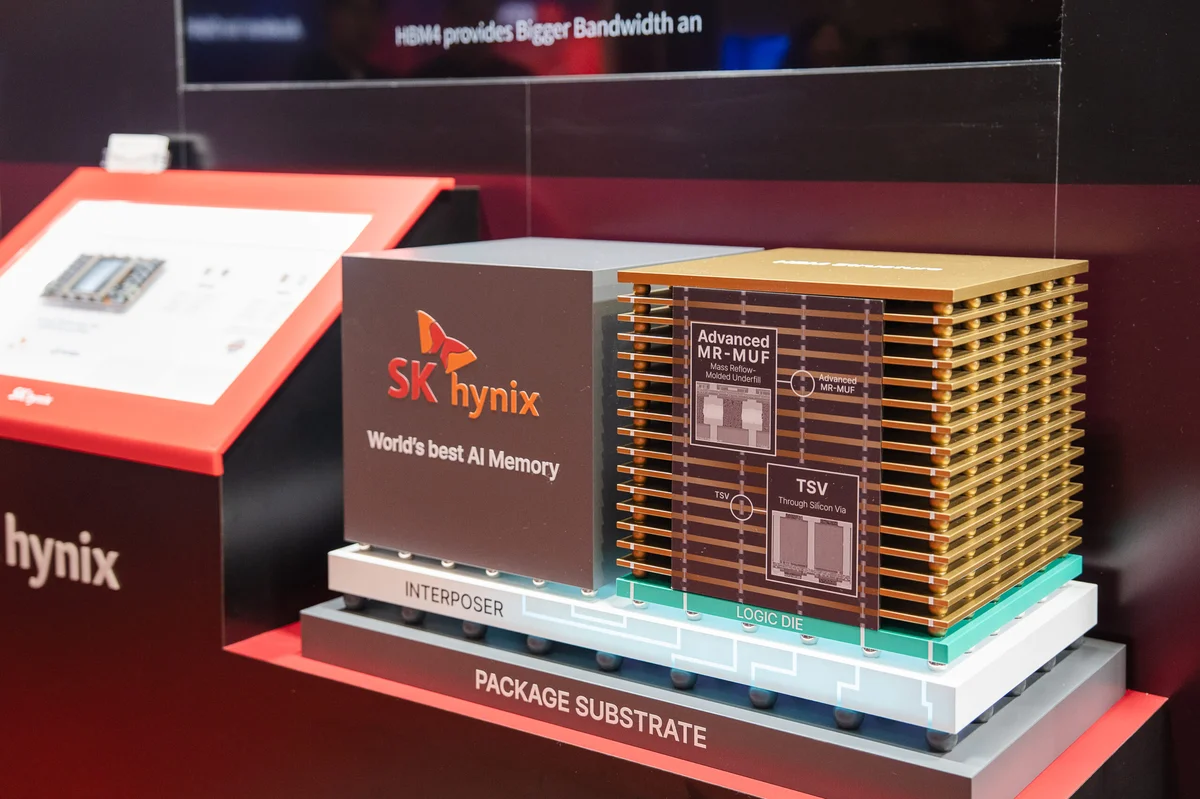
The company's HBM solutions are based on a stacked architecture, which allows for higher density and lower power consumption. The use of through-silicon vias (TSVs) and micro-bumps enables the creation of high-density memory stacks, which are ideal for applications such as artificial intelligence (AI), machine learning (ML), and high-performance computing (HPC). This stacked architecture also enables the development of more complex and sophisticated memory solutions, which are capable of meeting the evolving needs of SK Hynix's customers.
SK Hynix's HBM solutions are also designed to be highly scalable, which makes them ideal for use in a wide range of applications. The company's HBM2E technology, for example, is available in a range of capacities, from 4GB to 8GB, which makes it suitable for use in everything from high-performance gaming PCs to large-scale data centers. This scalability, combined with the company's commitment to innovation, has enabled SK Hynix to establish itself as a leader in the memory market.
Performance & Thermal
SK Hynix's HBM solutions are designed to provide high performance and low power consumption, making them ideal for applications where thermal management is critical. The company's HBM2E technology, for example, offers a power consumption of less than 1.2V, which is significantly lower than traditional DRAM solutions.
The use of advanced materials and manufacturing techniques, such as SK Hynix's MR-MUF technology, enables the creation of high-density memory stacks with low warpage and high stability. This is critical for ensuring reliable operation and minimizing thermal issues. The company's HBM solutions are also designed to operate at high temperatures, which makes them suitable for use in a wide range of applications, from consumer electronics to industrial equipment.
SK Hynix's commitment to thermal management is evident in its continued investment in research and development. The company has a strong team of engineers and researchers who are dedicated to developing new and innovative memory solutions that are capable of meeting the evolving needs of its customers. This commitment to innovation has enabled SK Hynix to stay ahead of the curve and to develop products that are highly reliable and efficient.
Technical Background
SK Hynix's high-bandwidth memory solutions are based on a range of underlying technologies, including DRAM and flash memory. The company's HBM solutions use a stacked architecture, which allows for higher density and lower power consumption. The use of through-silicon vias (TSVs) and micro-bumps enables the creation of high-density memory stacks, which are ideal for applications such as AI, ML, and HPC.
The company's HBM solutions are also based on a range of advanced materials and manufacturing techniques, including SK Hynix's MR-MUF technology. This technology enables the creation of high-density memory stacks with low warpage and high stability, which is critical for ensuring reliable operation and minimizing thermal issues.
Competitive Landscape
SK Hynix operates in a highly competitive market, with a range of rival products available from companies such as Samsung Electronics and Micron Technology. Samsung's HBM2E technology, for example, offers a bandwidth of up to 460 GB/s, which is similar to SK Hynix's HBM2E technology. Micron's HBM2 technology, on the other hand, offers a bandwidth of up to 256 GB/s, which is lower than SK Hynix's HBM2E technology.
Despite the competition, SK Hynix has established itself as a leader in the memory market. The company's commitment to innovation and its continued investment in research and development have enabled it to stay ahead of the curve and to develop products that meet the evolving needs of its customers. The company's HBM solutions are highly regarded for their high performance, low power consumption, and reliability, which makes them ideal for use in a wide range of applications.
Market Positioning
SK Hynix is a major player in the memory market, with a strong presence in the DRAM and flash memory segments. The company's products are used by a wide range of customers, including Microsoft, Apple, Asus, Dell, MSI, HP Inc., and Hewlett Packard Enterprise.
The company's HBM solutions are particularly well-suited for applications such as AI, ML, and HPC, where high-bandwidth memory is critical for performance. SK Hynix's HBM2E technology, for example, is used in a range of high-performance computing applications, including supercomputers and data centers. The company's HBM3 technology is also used in a range of applications, including AI and ML, where high-bandwidth memory is critical for performance.
SK Hynix's market positioning is also influenced by its commitment to innovation and its continued investment in research and development. The company has a strong team of engineers and researchers who are dedicated to developing new and innovative memory solutions, which has enabled it to stay ahead of the curve and to develop products that meet the evolving needs of its customers.