SpacemiT K3 RVA23
Executive Summary
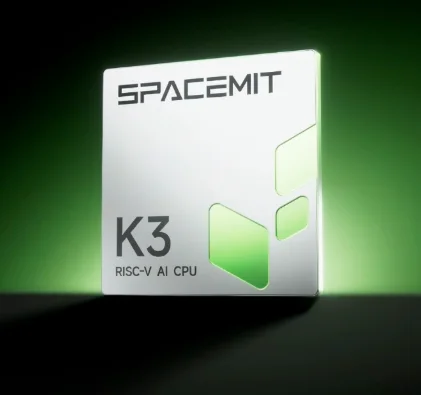
The SpacemiT K3 is a high-performance RISC-V System on Chip (SoC) designed for AI and edge computing applications. It combines eight X100 64-bit RISC-V CPU cores with eight A100 AI-oriented compute cores, along with multimedia, networking, and high-speed I/O support targeting edge and embedded AI workloads. This SoC is notable for its compliance with the RVA23 and RVV 1.0 standards, making it a significant player in the RISC-V ecosystem. The integration of the K3 SoC into development boards and its potential impact on the edge computing and AI markets are areas of interest. With its high-performance capabilities and adherence to industrial-grade standards, the SpacemiT K3 is poised to make a mark in the industry. However, the success of the K3 will depend on various factors, including its performance in real-world applications, the availability of software support, and how it compares to other solutions in the market.Architecture & Design
The SpacemiT K3 SoC features a CPU subsystem that integrates eight X100 64-bit RISC-V CPU cores operating at up to 2.4 GHz, with a shared 8MB L2 cache. This design is compliant with the RVA23 and RVV 1.0 standards, which is a significant aspect of its architecture. The AI subsystem consists of eight A100 AI cores rated for up to 60 TOPS using FP4 sparse workloads, along with vector extensions and AI-oriented instruction sets. The K3 SoC supports dual-channel LPDDR5 at up to 6400 MT/s or LPDDR4x at up to 4266 MT/s, with capacities up to 64GB and bandwidth up to 51 GB/s. Storage interfaces include SPI flash, eMMC 5.1, SD 3.0, UFS 2.2, and NVMe storage over PCIe. The multimedia subsystem integrates a GPU supporting Vulkan 1.3, OpenCL 3.0, OpenGL ES 3.2, and EGL 1.5 APIs, along with hardware video acceleration for various codecs, including H.264, H.265, VP8, VP9, MPEG2, MPEG4, VC-1, and H.263. Display support includes MIPI DSI and DP/eDP interfaces capable of driving dual 3840×2160 displays at 60 fps. The image subsystem provides four MIPI CSI interfaces with up to 12 total camera lanes, supporting multiple RAW and YUV formats. Connectivity features include eight PCIe Gen3 lanes with Root Complex and Endpoint modes, four Gigabit Ethernet MACs with TSN capability, multiple USB 3.0 interfaces, CAN-FD, SPI, UART, PWM, and I2C interfaces. The SoC also integrates virtualization and security extensions, including RVH 1.0, IOMMU support, secure boot, cryptographic acceleration, and protection mechanisms against speculative execution attacks. A dual-core RT24 RISC-V subsystem is included for system management and low-power operation. The K3 is designed for operation across an industrial temperature range of -40°C to +85°C, with a TDP ranging from 15W to 25W.Performance & Thermal
The SpacemiT K3 SoC is claimed to deliver up to 130 KDMIPS of compute performance. The AI subsystem, with its eight A100 AI cores, is rated for up to 60 TOPS using FP4 sparse workloads. The platform can reportedly run language models with up to 30 billion parameters at more than 10 tokens per second. However, detailed benchmark scores and thermal performance data under various workloads are not publicly disclosed. The TDP of the SoC ranges from 15W to 25W, indicating its power consumption characteristics. However, without specific benchmark results and thermal performance data, it's challenging to fully assess the K3's performance and efficiency. The availability of such data would be crucial for a comprehensive evaluation of the SoC's capabilities and its suitability for different applications.Market Positioning
The SpacemiT K3 is positioned as a high-performance RISC-V SoC for AI and edge computing applications. Its compliance with the RVA23 and RVV 1.0 standards is a significant factor in its market positioning, as it aligns with the growing ecosystem of RISC-V based solutions. The K3's integration into development boards, such as those from Banana Pi, further indicates its targeting of the developer and maker communities, as well as industrial and embedded systems markets. Pricing information for the SpacemiT K3 SoC or development boards featuring the K3 is not publicly disclosed. The competitive landscape for RISC-V SoCs is evolving, with various players entering the market. However, without direct comparisons or benchmark results against competing solutions, it's difficult to assess the K3's market position accurately.Verdict
The SpacemiT K3 represents a significant development in the RISC-V ecosystem, particularly with its compliance with the RVA23 and RVV 1.0 standards. Its architecture, featuring a combination of high-performance CPU and AI-oriented compute cores, makes it an attractive option for edge computing and AI applications. However, the success of the K3 will depend on factors such as software support, performance in real-world applications, and its positioning within the competitive landscape of RISC-V and other architectures. As the RISC-V ecosystem continues to grow, solutions like the SpacemiT K3 will play a crucial role in expanding the adoption of RISC-V in various markets. The availability of development boards and the progression of software support, including Linux kernel integration, are positive indicators for the K3's potential. Nonetheless, a comprehensive evaluation of the SoC's performance, power efficiency, and cost-effectiveness in comparison to other solutions will be essential for determining its long-term impact and market success.Specifications
| CPU Cores | 8 X100 64-bit RISC-V CPU cores |
|---|---|
| AI Cores | 8 A100 AI-oriented compute cores |
| Clock Speed | Up to 2.4 GHz |
| L2 Cache | 8MB shared |
| Memory Support | Dual-channel LPDDR5 at up to 6400 MT/s or LPDDR4x at up to 4266 MT/s |
| Storage Interfaces | SPI flash, eMMC 5.1, SD 3.0, UFS 2.2, NVMe storage over PCIe |
| GPU | Supports Vulkan 1.3, OpenCL 3.0, OpenGL ES 3.2, and EGL 1.5 APIs |
| Display Support | MIPI DSI and DP/eDP interfaces capable of driving dual 3840×2160 displays at 60 fps |
| Image Subsystem | Four MIPI CSI interfaces with up to 12 total camera lanes |
| Connectivity | Eight PCIe Gen3 lanes, four Gigabit Ethernet MACs, multiple USB 3.0 interfaces, CAN-FD, SPI, UART, PWM, and I2C interfaces |
| Virtualization and Security | RVH 1.0, IOMMU support, secure boot, cryptographic acceleration, protection mechanisms against speculative execution attacks |
| TDP | 15W to 25W |
| Operating Temperature | -40°C to +85°C |
Frequently Asked Questions
What is the SpacemiT K3 SoC?
The SpacemiT K3 is a high-performance RISC-V System on Chip (SoC) designed for AI and edge computing applications.
What standards does the SpacemiT K3 comply with?
The SpacemiT K3 complies with the RVA23 and RVV 1.0 standards.
What is the clock speed of the X100 CPU cores in the SpacemiT K3?
The X100 CPU cores in the SpacemiT K3 operate at up to 2.4 GHz.
What is the TDP of the SpacemiT K3 SoC?
The TDP of the SpacemiT K3 SoC ranges from 15W to 25W.
What operating temperature range is the SpacemiT K3 designed for?
The SpacemiT K3 is designed for operation across an industrial temperature range of -40°C to +85°C.