Thermal pads with in-built vapor-chambers
Thermal Pads with In-Built Vapor Chambers: A Revolutionary Cooling Solution
Thermal management has become a critical aspect of modern electronics, particularly in the realm of smartphones and other portable devices. The increasing power density of these devices has led to a rise in thermal challenges, making it essential to develop innovative cooling solutions. One such solution that has gained significant attention in recent years is the integration of thermal pads with in-built vapor chambers. In this article, we will delve into the world of thermal pads with in-built vapor chambers, exploring their architecture, design, performance, and market positioning.
Executive Summary
Thermal pads with in-built vapor chambers, such as the Vapor-Pad from Xerendipity, offer a groundbreaking solution for thermal management in electronic devices. By combining the benefits of traditional thermal pads with the high thermal conductivity of vapor chambers, these innovative pads provide a significant improvement in heat dissipation. With a claimed thermal conductivity of 800-1,200 W/m-K, these pads outperform traditional thermal pads by a factor of 50-80. This technology has the potential to revolutionize the way we approach thermal management in electronic devices, enabling the development of more powerful and efficient systems.
Architecture & Design
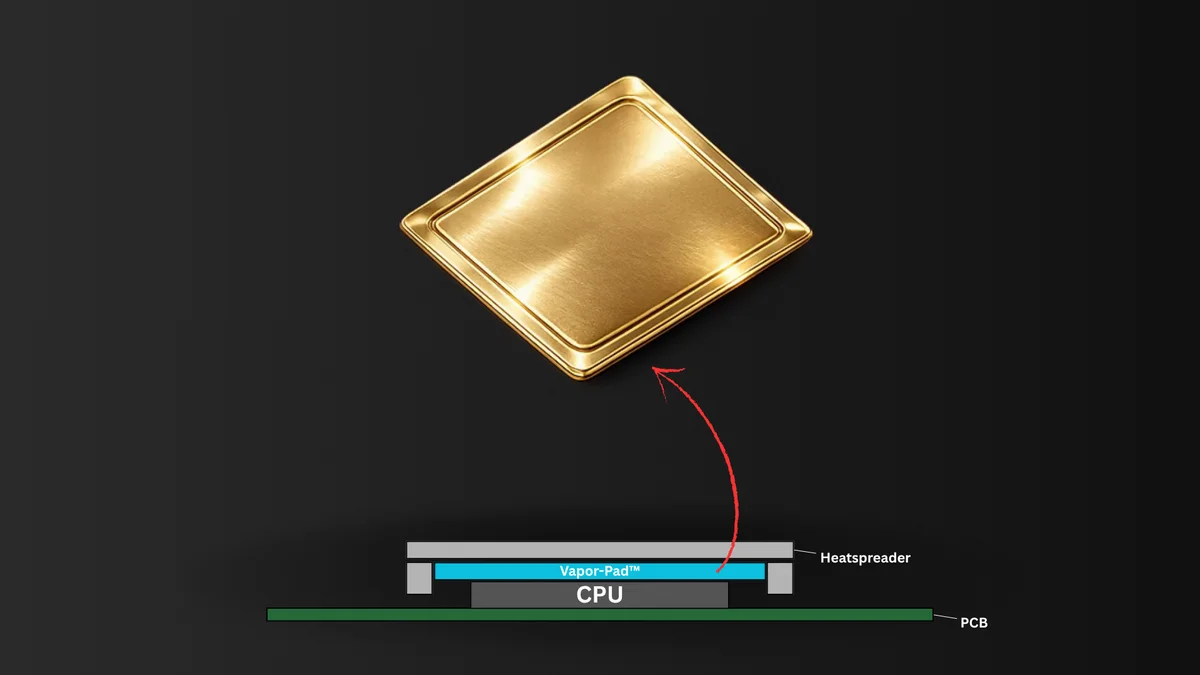
The Vapor-Pad, developed by Xerendipity, is a hybrid solution that combines a thermal pad with a thin vapor chamber. This design allows for the benefits of both technologies to be leveraged, providing a high thermal conductivity while maintaining the ease of application of traditional thermal pads. The vapor chamber is essentially a sticker with a thin vapor chamber on it, which can be applied directly to the CPU or other heat-generating components. This design enables the Vapor-Pad to come into direct contact with the silicon and the Integrated Heat Spreader (IHS), acting as an optimal thermal buffer between the two.
The Non-Metal Vapor Chamber (NVMC) is another innovative solution from Xerendipity, designed to cool the entire device without disrupting signals. The NVMC is a self-explanatory solution that addresses the issue of metal vapor chambers blocking Wi-Fi and 5G cellular signals. By using a non-metal material, the NVMC provides a signal-friendly cooling solution that can be used in conjunction with the Vapor-Pad to create a comprehensive thermal management system.
Performance & Thermal
The performance of thermal pads with in-built vapor chambers is nothing short of impressive. With a claimed thermal conductivity of 800-1,200 W/m-K, these pads outperform traditional thermal pads by a significant margin. This increased thermal conductivity enables the efficient dissipation of heat, reducing the risk of overheating and improving the overall performance of the device. The Vapor-Pad, in particular, has been designed to replace traditional Thermal Interface Materials (TIMs) in CPUs, providing a more efficient and reliable cooling solution.
The thermal performance of these pads is further enhanced by their ability to come into direct contact with the silicon and the IHS. This direct contact enables the efficient transfer of heat from the CPU to the vapor chamber, where it can be dissipated quickly and efficiently. The result is a significant reduction in thermal resistance, enabling the device to operate at a lower temperature and improving its overall reliability and lifespan.
Market Positioning
The market for thermal pads with in-built vapor chambers is still in its infancy, but it has the potential to become a significant player in the thermal management industry. The Vapor-Pad from Xerendipity is one of the first products to market, and it has already generated significant interest among device manufacturers and enthusiasts alike. As the demand for more powerful and efficient devices continues to grow, the need for innovative thermal management solutions will become increasingly important.
The Vapor-Pad and other similar products are well-positioned to capitalize on this trend, offering a unique combination of high thermal conductivity, ease of application, and signal-friendly design. As the technology continues to evolve, we can expect to see further innovations and improvements, enabling the development of even more powerful and efficient devices.
Verdict
In conclusion, thermal pads with in-built vapor chambers represent a significant breakthrough in thermal management technology. The Vapor-Pad from Xerendipity is a pioneering product that has set a new standard for thermal pads, offering a unique combination of high thermal conductivity, ease of application, and signal-friendly design. As the demand for more powerful and efficient devices continues to grow, the importance of innovative thermal management solutions will become increasingly important. The Vapor-Pad and other similar products are well-positioned to play a key role in this trend, enabling the development of more powerful, efficient, and reliable devices.
Specifications
| Thermal Conductivity | 800-1,200 W/m-K |
|---|---|
| Thickness | Thin vapor chamber |
| Application | Easy to apply, like a traditional thermal pad |
| Compatibility | Designed for use with CPUs and other heat-generating components |
| Signal-Friendly | Non-metal vapor chamber design |
Frequently Asked Questions
What is a thermal pad with an in-built vapor chamber?
A thermal pad with an in-built vapor chamber is a hybrid solution that combines a traditional thermal pad with a thin vapor chamber, providing a high thermal conductivity and ease of application.
How does the Vapor-Pad work?
The Vapor-Pad works by coming into direct contact with the silicon and the Integrated Heat Spreader (IHS), acting as an optimal thermal buffer between the two and enabling the efficient dissipation of heat.
What are the benefits of using a thermal pad with an in-built vapor chamber?
The benefits of using a thermal pad with an in-built vapor chamber include high thermal conductivity, ease of application, and signal-friendly design, making it an ideal solution for thermal management in electronic devices.