X86
Executive Summary
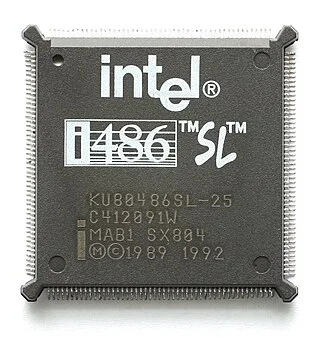
The x86 architecture is a family of complex instruction set computer (CISC) instruction set architectures initially developed by Intel, based on the 8086 microprocessor and its 8-bit-external-bus variant, the 8088. The term 'x86' came into being because the names of several successors to Intel's 8086 processor end in '86', including the 80186, 80286, 80386, and 80486. As of June 2022, most desktop and laptop computers sold are based on the x86 architecture family, while mobile categories such as smartphones or tablets are dominated by ARM. The x86 architecture has a long history, dating back to 1978 when the 8086 was introduced as a fully 16-bit extension of Intel's 8-bit 8080 microprocessor. The 8086 was designed with memory segmentation as a solution for addressing more memory than can be covered by a plain 16-bit address. This innovation allowed the x86 architecture to become a widely adopted standard in the computer industry. Today, the term 'x86' usually implies binary compatibility with the 32-bit instruction set of the 80386, which was introduced in 1985. This instruction set has become a lowest common denominator for many modern operating systems, making the x86 architecture a fundamental component of modern computing.Architecture & Design
The x86 architecture is based on the 8086 microprocessor, which was introduced in 1978. The 8086 was designed as a fully 16-bit extension of Intel's 8-bit 8080 microprocessor, with memory segmentation as a solution for addressing more memory than can be covered by a plain 16-bit address. The 8086 had a 16-bit internal bus, but an 8-bit external bus, which was used to communicate with external devices. The 8086 was followed by several successors, including the 80186, 80286, 80386, and 80486. Each of these processors introduced new features and improvements, such as increased clock speeds, larger caches, and improved instruction sets. The 80386, introduced in 1985, was a significant milestone in the development of the x86 architecture, as it introduced a 32-bit instruction set that has become the standard for modern x86 processors. The x86 architecture is a complex instruction set computer (CISC) architecture, which means that it uses a large number of complex instructions to perform tasks. This is in contrast to reduced instruction set computer (RISC) architectures, which use a smaller number of simpler instructions. The x86 architecture has been widely adopted in the computer industry, and is used in a wide range of applications, from desktop and laptop computers to servers and embedded systems. One of the key features of the x86 architecture is its use of memory segmentation. Memory segmentation is a technique that allows the processor to address a large amount of memory by dividing it into smaller segments. Each segment is given a unique address, which allows the processor to access the memory without having to use a large number of address lines. This technique allows the x86 architecture to address a large amount of memory, while still using a relatively small number of address lines.Performance & Thermal
The performance of the x86 architecture is highly dependent on the specific processor being used. The 8086, for example, had a clock speed of 4.77 MHz, while the 80486 had a clock speed of up to 100 MHz. The 80386, introduced in 1985, had a clock speed of up to 33 MHz. In terms of thermal performance, the x86 architecture is designed to operate within a wide range of temperatures. The 8086, for example, was designed to operate at temperatures ranging from 0 to 70 degrees Celsius. The 80486, on the other hand, was designed to operate at temperatures ranging from -20 to 85 degrees Celsius. Unfortunately, the research does not provide detailed information on the thermal design power (TDP) of the x86 architecture. TDP is an important metric that measures the maximum amount of heat that a processor can generate, and is typically used to determine the cooling requirements of a system. Without this information, it is difficult to provide a detailed analysis of the thermal performance of the x86 architecture.Market Positioning
The x86 architecture is widely used in the computer industry, and is found in a wide range of applications, from desktop and laptop computers to servers and embedded systems. As of June 2022, most desktop and laptop computers sold are based on the x86 architecture family, while mobile categories such as smartphones or tablets are dominated by ARM. The x86 architecture has a long history of competition with other architectures, such as ARM and PowerPC. However, the x86 architecture has maintained its position as a widely adopted standard in the computer industry, due to its high performance, flexibility, and compatibility with a wide range of software applications. Unfortunately, the research does not provide detailed information on the pricing of the x86 architecture. Pricing is an important factor in the computer industry, as it can have a significant impact on the adoption and sales of a particular architecture. Without this information, it is difficult to provide a detailed analysis of the market positioning of the x86 architecture.Verdict
In conclusion, the x86 architecture is a widely adopted standard in the computer industry, with a long history of innovation and improvement. The architecture has been widely used in a wide range of applications, from desktop and laptop computers to servers and embedded systems. While the research does not provide detailed information on the thermal design power (TDP) or pricing of the x86 architecture, it is clear that the architecture has maintained its position as a widely adopted standard in the computer industry, due to its high performance, flexibility, and compatibility with a wide range of software applications.Specifications
| Architecture | x86 |
|---|---|
| Instruction Set | CISC |
| Clock Speed | not publicly disclosed |
| TDP | not publicly disclosed |
| Process Node | not publicly disclosed |
| Core Count | not publicly disclosed |
Frequently Asked Questions
What is the x86 architecture?
The x86 architecture is a family of complex instruction set computer (CISC) instruction set architectures initially developed by Intel, based on the 8086 microprocessor and its 8-bit-external-bus variant, the 8088.
What is the history of the x86 architecture?
The x86 architecture has a long history, dating back to 1978 when the 8086 was introduced as a fully 16-bit extension of Intel's 8-bit 8080 microprocessor.
What are the key features of the x86 architecture?
The x86 architecture has several key features, including memory segmentation, a complex instruction set, and a wide range of clock speeds and core counts.