Humanoid hand
Executive Summary
The Humanoid hand, a crucial component of humanoid robots, has undergone significant development in recent years. As of April 2026, leading humanoid developers have converged on five-fingered, anthropomorphic hands, but their design philosophies diverge sharply in actuation, sensing, materials, and control architecture. The hand is one of the most complex mechanical subsystems in the human body, with approximately 27 degrees of freedom, thousands of tactile receptors, fine force control, and is waterproof. Humanoid robots, such as the Sanctuary AI Phoenix, have been designed to mimic human-like intelligence and functionality, with a focus on general-purpose applications.
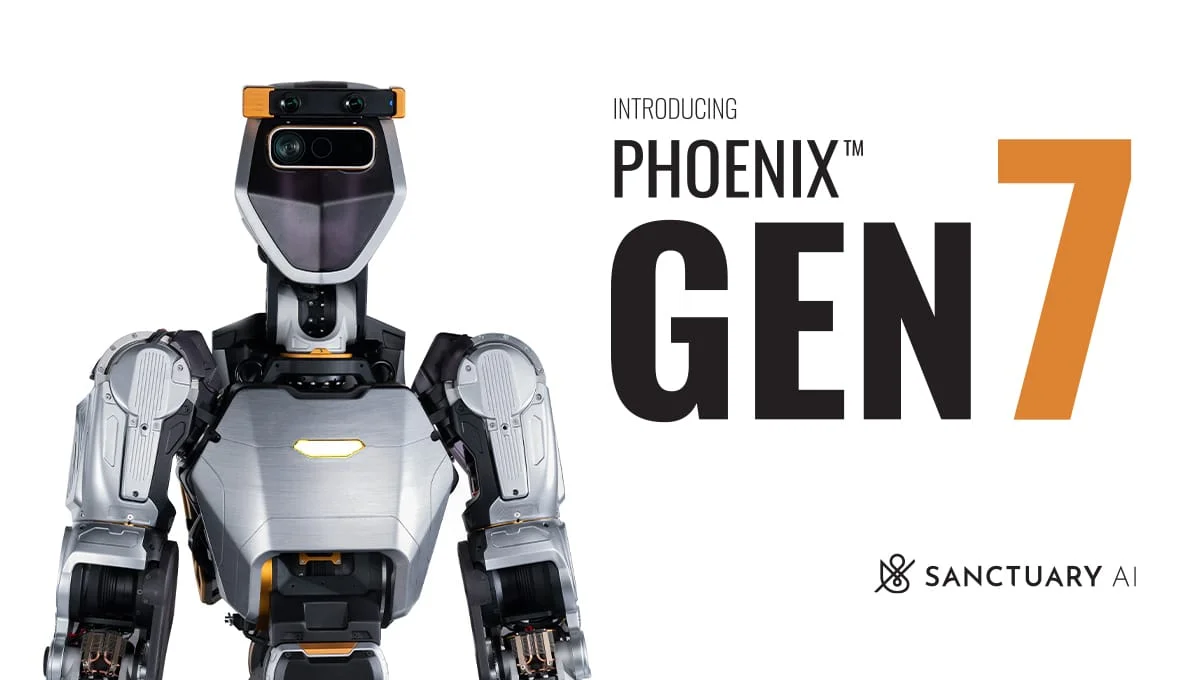
The Sanctuary AI Phoenix, for example, features a humanoid robot design with human-like hands capable of fine dexterity, supporting a maximum payload of 25 kg. The robot stands at 170 cm and weighs 70 kg, with full body mobility and the ability to perform tasks requiring complex motor skills and interaction with diverse environments. The Phoenix integrates Sanctuary's Carbon AI control system, which simulates human brain subsystems including memory and sensory perception, allowing the robot to adapt and perform a wide array of tasks traditionally done by humans.
Architecture & Design
Humanoid hands, such as those found in the Sanctuary AI Phoenix, have been designed to closely mimic the human hand. The Phoenix's hands have 20 degrees of freedom, with proprietary haptic technology that mimics the sense of touch. The robot's design includes improved aesthetics with a bolder color palette and elevated textures, as well as symbolic and logical reasoning coupled with modern LLMs (for general knowledge), domain-specific integrations, and extensions.
The Phoenix's Carbon AI control system is a key differentiator, allowing the robot to learn new tasks and perform them autonomously in under 24 hours. The system simulates human brain subsystems, including memory and sensory perception, and is powered by a cognitive architecture that is fundamentally different from the AI approaches used by most humanoid competitors. The robot's design also includes improved visual acuity and tactile sensing, enabling it to learn new tasks quickly and perform them with precision.
The development of humanoid hands has a long history, dating back to the 1960s with the Stanford/JPL hand and the 1980s with the Utah/MIT hand. These early robotic hands were laboratory prototypes that prioritized research over practicality. However, with the advent of commercial efforts such as the Shadow Dexterous Hand in 2005, the standard for humanoid hands was established. The Shadow Dexterous Hand supported 20 degrees of freedom with 24 independent movements, tendon-driven actuation, and extensive tactile sensing.
Modern humanoid robots, such as the Tesla Optimus (Gen 3), Figure 02/Helix 02, Sanctuary AI Phoenix, Boston Dynamics Atlas (electric production version), Apptronik Apollo, and the research benchmark Shadow Dexterous Hand, have converged on five-fingered, anthropomorphic hands. However, their design philosophies diverge sharply in actuation, sensing, materials, and control architecture. The Sanctuary AI Phoenix, for example, uses a tendon-driven or hybrid actuation system, while other robots may use different approaches.
Performance & Thermal
The performance of humanoid robots, such as the Sanctuary AI Phoenix, is measured by their ability to learn new tasks and perform them autonomously. The Phoenix can learn new tasks in as little as 24 hours, compared to weeks for its predecessor. The robot's improved visual acuity and tactile sensing enable it to perform tasks with precision and accuracy. The Phoenix's maximum payload is 25 kg, and it has a top speed of 1.34 m/s.
The thermal performance of the Phoenix is not publicly disclosed. However, the robot's design includes a focus on durability and affordability, with a mass-producible design that can tolerate varying environmental conditions. The Phoenix's power source is not publicly disclosed, but it is likely to be an electric or hydraulic system, given the robot's specifications.
Market Positioning
The Sanctuary AI Phoenix is positioned as a general-purpose humanoid robot, designed to mimic human-like intelligence and functionality. The robot is priced competitively, with a product mass of 70 kg and a height of 1.7 m. The Phoenix is designed to work alongside humans in a complementary fashion, enhancing workplace safety and efficiency. The robot's integration of both symbolic and neural reasoning in its AI system ensures a balanced approach, enhancing the robot's decision-making and operational efficiency in real-world scenarios.
The Phoenix's competitors include other humanoid robots, such as the Neura Robotics 4NE-1, which is distinguished by its advanced cognitive abilities and human-like form factor. The 4NE-1 stands 180 cm tall and weighs 80 kg, with a unique touchless human detection sensor and force-torque sensors that provide a sophisticated sense of touch. However, the Phoenix's Carbon AI control system and proprietary haptic technology give it a unique advantage in the market.
Verdict
In conclusion, the Humanoid hand is a complex mechanical subsystem that has undergone significant development in recent years. The Sanctuary AI Phoenix is a prime example of a humanoid robot that has been designed to mimic human-like intelligence and functionality, with a focus on general-purpose applications. The Phoenix's Carbon AI control system and proprietary haptic technology give it a unique advantage in the market, and its ability to learn new tasks and perform them autonomously in under 24 hours makes it an attractive option for a wide range of industries.
However, the development of humanoid hands is an ongoing process, and there are still many challenges to be overcome. The Phoenix's design is not without its limitations, and the robot's performance and thermal characteristics are not fully disclosed. Nevertheless, the Phoenix is an important step forward in the development of humanoid robots, and its potential applications are vast and varied. As the technology continues to evolve, we can expect to see even more advanced humanoid robots that can perform a wide range of tasks with precision and accuracy.
Future Developments
The future of humanoid robots is exciting and uncertain. As the technology continues to evolve, we can expect to see even more advanced humanoid robots that can perform a wide range of tasks with precision and accuracy. The development of humanoid hands will play a crucial role in this process, as robots become increasingly capable of interacting with their environment in a human-like way.
The Sanctuary AI Phoenix is just one example of a humanoid robot that is pushing the boundaries of what is possible. With its advanced Carbon AI control system and proprietary haptic technology, the Phoenix is well-positioned to take advantage of the growing demand for humanoid robots in a wide range of industries. As the technology continues to evolve, we can expect to see even more innovative applications of humanoid robots in the future.
Conclusion
In conclusion, the Humanoid hand is a complex mechanical subsystem that has undergone significant development in recent years. The Sanctuary AI Phoenix is a prime example of a humanoid robot that has been designed to mimic human-like intelligence and functionality, with a focus on general-purpose applications. The Phoenix's Carbon AI control system and proprietary haptic technology give it a unique advantage in the market, and its ability to learn new tasks and perform them autonomously in under 24 hours makes it an attractive option for a wide range of industries.
The development of humanoid hands is an ongoing process, and there are still many challenges to be overcome. However, the potential applications of humanoid robots are vast and varied, and the technology is likely to have a significant impact on a wide range of industries in the future. As the technology continues to evolve, we can expect to see even more advanced humanoid robots that can perform a wide range of tasks with precision and accuracy.
Specifications
| Payload | 25 kg |
|---|---|
| Power | not publicly disclosed |
| Product mass | 70 kg |
| Top Speed | 1.34 m/s |
| Height | 1.7 m |
| Degrees of Freedom | 20 |
| Haptic Technology | proprietary |
| AI Control System | Carbon AI |
| Sensing | tactile sensing, visual acuity |
Frequently Asked Questions
What is the payload of the Sanctuary AI Phoenix?
25 kg
What is the power source of the Sanctuary AI Phoenix?
not publicly disclosed
What is the product mass of the Sanctuary AI Phoenix?
70 kg
What is the top speed of the Sanctuary AI Phoenix?
1.34 m/s
What is the height of the Sanctuary AI Phoenix?
1.7 m